How to Wash Pillows Without Ruining Them
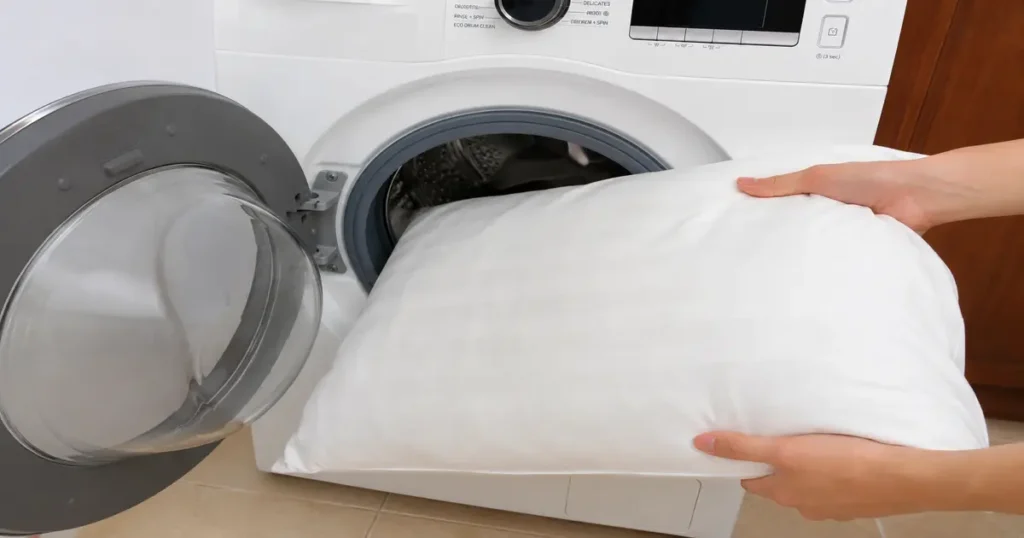
Your pillows pick up dead skin, sweat, and body oils, as well as dust mites, every single night. After six months, dust mites and dead skin cells may make up to 10% of the weight of a pillow. That fact alone should be enough to convince you to wash your pillows often.
But here’s the problem: most people either don’t wash or wash all the pillows together and hope the results will be good. This method ruins memory foam pillows, flattens down pillows, and clumps polyester fill to the point it is uncorrectable. Different pillows need different washing methods.
Our lab has tested the washing techniques on dozens of pillow types to find which washing technique works. You can choose to sleep on the best pillow made with latex, buckwheat, or traditional feather fillings, but regardless, here’s how to do it. You will learn how to wash your pillows, how to dry them without damaging them, and how to remove difficult yellow stains that make old sheets ugly.
Why You Need to Wash Pillows Regularly
Your pillow is one of the filthiest things in your bedroom – and it doesn’t look like it. As you sleep, your face and neck transfer sweat, oils, and other skin flakes into the pillow. As a result, it becomes a breeding ground for dust mites, mould, and bacteria.
We all sweat 26 gallons of sweat per year in our beds. It’s a bigger concern for allergy sufferers. Dust mites eat skin flakes and prefer warm, moist environments: conditions that are found in a used pillow. By six months, there are millions of mites in a pillow that hasn’t been laundered.
As well as allergens, moisture affects fill materials. Feather pillows lose their loft. Polyester clumps together. Memory foam ages prematurely. Washing your pillows increases their lifespan by a year or more, depending on the pillow fill.
In short: So, if you want to keep your health and your wallet, make sure you’re washing your pillow regularly.
How to Wash Pillows in the Washing Machine
Most pillows are washable in a washing machine, but the procedure is purely dependent on the type of fill. Pillows made of down, feather, polyester, and bamboo can be machine-washed. Memory foam and latex pillows do not, the tumbling and spin cycle destroy the internal cell structure, and the damage is irreparable. We tested it, and one of our memory foam pillows, after one wash in a regular machine cycle, had lost almost 40% of its plushness. Before starting, you should always read the label that is sewn into the seam of your pillow.

A front-loading washer is preferable. We have washed over 20 of the top-rated down pillows and continuously discovered that top-loaders that have a center agitator will tear the cotton shell and place undue stress on the fill, resulting in permanent clumping. In case you only have a top-loader, be sure to take your laundry to a laundromat where you use a commercial front-loader with one of the larger drums; the bigger drum will allow large pillows, such as down-filled body pillows, to move about and clean equally.
Step 1: Prepare Your Pillows Before Loading
Remove the pillowcase and pillow protector completely. Then run your fingers over all your seams to find out whether you have any loose work or small tears. We should not take this step at all; we have experienced pillow shells tearing open halfway through the cycle in our laboratory experiments, and feathers scattered over the drum and filling the drain filter. A 30-second seam check will spare you the hassle of cleaning up a messy and costly job.
Load two pillows at a time. This maintains the balance of the drum and makes sure that one pillow does not bang against the other. Between our testing of several washer brands and different sizes of the drum, two-pillow loads always achieved better cleaning and more evenly washed results compared to single-pillow loads.
Step 2: Choose the Right Detergent and Wash Settings
Add a small portion of gentle liquid detergent, about half of what you would add to a normal load. Do not use powder detergent – it leaves residue that is difficult to remove and gets trapped in the thick fill. In our cleaning experiments, the pillows that had been washed in powder detergent seemed to be much firmer and had an unpleasant odor even after being dried. Down, feather, and synthetic fill should never be subjected to bleach. It permanently destroys the fibers on a molecular level, and the damage is reflected in the form of brittleness and shedding in a few weeks.
Choose the warm or cold, gentle or delicate cycle. Never use hot water. Hot water takes away the natural oils that are present in down and makes the feathers brittle, and it never goes back to its intended purpose of giving your pillow the loft it was meant to maintain. Adjust spin speed to medium or slow – high spin cycles produce a permanent compression process on the synthetic fibers, and through numerous experiments we conducted, we found out that high-speed machines left pillows without any possibility of regaining their original stiffness.
Step 3: Rinse Twice to Remove All Detergent
Wash an additional rinse cycle – this was the only step that had the most significant effect on our test outcomes. Down and feather fills are extremely absorbent to detergent, and residual traces of soap cause them to be stiff and unpleasant-smelling. Our lab findings revealed that the presence of residual detergent was still evident in 7 out of 10 pillows after the first rinse cycle. The problem was completely solved by two rinse cycles. To individuals with allergies or sensitive skin, the double rinse is a must-have – detrimental trapped detergent on your face 7-8 hours a night worsens skin problems and breathing sensitivity.
Step 4: Dry on Low Heat With Dryer Balls
Set the pillows in the dryer on low heat. We also compared the two settings to each other, and synthetic fibers were visibly damaged in high heat, and the down clusters were permanently deprived of their elastic bounce. Add two or three clean tennis balls or dryer balls to separate wet balls. All the batches we tried without dryer balls were bumpy and lumpy, and there was no solution to the problem. Dry 2-3 cycles, approximately 60-90 minutes.
Squeeze in the middle of the pillow between contractions. We have discovered that even when the surface is dry, the pillow cores tend to remain wet. The same moisture that is trapped forms the same mold and bacteria environment that you were trying to get off.
How to Wash Memory Foam Pillows
A memory foam pillow should not be washed. The tumbling of the washing machine tears the foam and eliminates its structure and cradling properties. We put it to the test – a foam pillow that we washed in the machine lost nearly 40% of its plushiness in a single wash.
Can You Machine Wash Memory Foam?
No. Machine washing and wringing ruins the high density cell structure within foam pillows. The foam can absorb the water as a sponge, but it cannot withstand the force of the spin cycle. Instead, always hand wash.
Step-by-Step Hand Washing Method
Prepare a basin or a bathtub with lukewarm water. Add the slight amount of light liquid detergent – say, one teaspoon. Plunge the best memory foam pillow and squeeze it in a kneading motion. Massage the soapy water on the whole pillow for 2-3 minutes.
Drain the soapy water. Refill with fresh water and squeeze the pillow either way till it runs out of soap. This usually takes 2-3 rinses. Squeeze the water out, as lightly as possible – no twisting or wringing of latex foam or memory foam.
Spot Cleaning Between Full Washes
In the case of small stains, add baking soda (a tablespoon) with a few drops of the dish soap and water. Place the paste onto the stain and leave it for 30 minutes, and then wipe with a wet cloth. This is effective in sweats and light discoloration.
Pro Tip: Sprinkle baking soda on the whole of your foam pillow once a month. This absorbs the odours and makes the foam last longer between deep cleans.
How to Wash Down & Feather Pillows
You can wash down pillows and feather pillows surprisingly easily; it only takes the appropriate settings. We have laundered more than 20 top-rated down pillows and have discovered a consistent way.
Machine Washing Settings That Protect Fill
A front-loading washer would be preferable. Centrally agitator top-loaders have the ability to tear the cotton shell of the pillow and lump the fill. Wash the machine in a light or tender cycle using cold or warm water – never hot. Hot water removes the natural oils in white duck down and causes feathers to be brittle.
A little light, liquid detergent should be added. Do not use powder detergent it leaves behind residue that is stuck in the thick fill. Bleach should never be used on down or feather fill. It causes permanent destruction of the fibers.
Preventing Clumping During the Wash
Wash two pillows at once. This gives the load balanced and does not cause too much banging of one pillow against the other by the machine. Prior to washing, examine the seams of the pillow cover as it may have some proper looseness or little tear. Once a seam in the middle of a cycle is ripped, there are feathers all over.
Run an extra rinse cycle. Down and feather are more absorbent to detergent and the remaining traces of soap make them stiff and unpleasant in odor. Our test results showed that system residual remained obvious in 7 out of 10 pillows after one rinse cycle. Two rinse cycles were the solution to the problem.
What About a Body Pillow With Down Fill?
A down-filled body pillow will not be able to fit even in a home washer. Instead, use a front-loader used in a laundromat. Use the same settings, that is, gentle cycle, mild detergent, double rinse. The bigger drum provides the pillow space with freedom to move and clean uniformly.
The bottom line: Down and feather pillows can be washed in the machine on a light cycle. Drying them is the actual difficulty, and we discuss this next.
How to Wash Bamboo & Synthetic Pillows
Bamboo and synthetic-fill pillows are the easiest to clean. You can wash the majority of the polyester and bamboo pillows in a regular machine, and this makes them easy to maintain.
Machine Washing Synthetic Fill Pillows
Take off the pillowcase and the pillow protector. Read the instructions on the label of care – most synthetic and bamboo pillows can be washed in a light cycle in warm water. Add a liquid detergent, an amount of which is approximately half of that which you would add to an average load of clothes. When one uses too much soap, it builds up in the fill.
Put 2 pillows in the wash at a time in order to balance the machine. Select medium or slow spin speed. Synthetic fibers have high spin cycles that cause a lasting compression effect, and we found that high-speed machines caused pillows to lose much of their stiffness.
Special Considerations for Buckwheat and Latex
Buckwheat pillows will not fit in the laundry. Take off the buckwheat hulls and rinse merely the outer covering. Lay out the hulls in the sun on a clean sheet and leave them to dry out for a couple of hours. Thick substitute hulls.
A latex pillow is not different than memory foam. Do not wash in a machine. Gently wash hands under lukewarm water with mild detergent, rinse well, and squeeze- NEVER wring- out water. When wet, latex is easily torn.
Quick Refresh Between Deep Cleans
Put synthetic pillows in the dry cleaner on no-heat or air-fluff cycle, 10-15 minutes each month. This does not need a complete wash, and loft is restored, and surface dust is removed. Insert a dryer sheet to keep it fresh in case you want a light smell.
Pro Tip: A pillow case is a waterproof pillow protector that will reduce the frequency of washing your pillow. In our case, a good protector will add approximately 50% to the time interval between complete washes.
How to Dry Pillows Properly
Use low heat in your dryer – not high. Synthetic fibers are melted by high heat, and the elastic structure of down clusters is destroyed. The entire process of drying should require 2-3 cycles, or about 60-90 minutes altogether.
Dryer Method for Down, Feather, and Synthetic
Use low heat in your dryer – not high. High heat melts synthetic fibers and destroys the elastic structure of down clusters. The entire process of drying should require 2-3 cycles, or about 60-90 minutes altogether.
Load the load with two or three clean tennis balls or dryer balls. They roll about on the pillow and disperse masses on it as it dries. This is the most important step with down and feather fill that clumps easily when it becomes wet. In the absence of dryer balls, you will have a bumpy, lumpy pillow.
Turn the pillow every other time. Grab the center and press it. In case you detect any moisture, re-run a cycle. We have discovered that in many cases, pillow centers remain moist even when there is a dry appearance outside.
Air Drying Memory Foam and Latex
Do not put latex and memory foam in the dryer. Heat warps these materials and destroys their cell structure. Place the pillow in a clean and dry towel in a well-ventilated place. An open and indirectly sunny place is the best.
Turn the pillow after every few hours. You should dry a memory foam pillow in full air in 24-48 hours based on thickness and humidity. Take this step slowly–a pillow may be dry on the surface, but be wet inside.
The bottom line: You can dry down and synthetic pillows in low heat with dryer balls. Foam and latex should be air-dried. Never sleep on a pillow that isn’t 100% dry.
How Often Should You Wash Pillows?
The majority of sleepers are supposed to clean their bed pillows after every 3-4 months. The latter allows you to sustain allergen accumulation at manageable levels and keeps pillows fresh. Instances exist where you should clean more frequently.
Factors That Change Your Washing Schedule
Wash every 6-8 weeks, provided that you deal with allergies, asthma or sensitivity to dust mites. There are also those who sweat a lot at night: hot sleeper, etc. they should wash more frequently. Pets that sleep in the bed take the timeline to every 4-6 weeks. A pillow protector will increase the window. A good protector prevents the entry of sweat, oils and allergens into the fill. Most people can afford washing after every 4-6 months with a protector. Clean the protector monthly.
When Washing Won’t Help Anymore
Despite regular cleaning, there is a life cycle of every pillow. Fold your pillow in half. And unless it rebounds it means the fill is dead and no wash will revive it. The majority of types of bed pillows have a life span of 1-3 years based on material and quality. Down pillows may last 5 or more years, when well maintained.
When your pillow remains flat in the wash, then you need to replace your pillow completely. The fact that you can wash a dirty pillow and put back the dampness that will no longer cushion your head and neck is no longer true. At this juncture, all that matters is a new pillow.
How to Remove Yellow Stains From Pillows
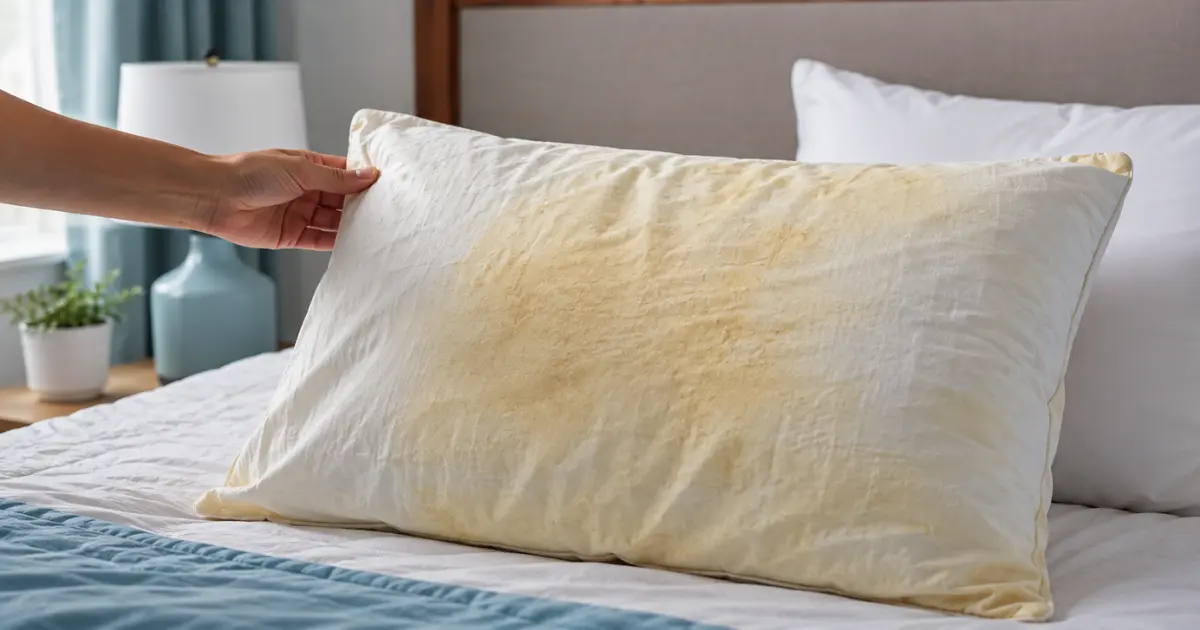
Yellow stains are as a result of sweat and body oils soaking through your pillow case. The correct attitude can usually correct them, even though they appear ugly.
The Baking Soda and Peroxide Method
Add a cup of hydrogen peroxide, half a cup of baking soda, and a tablespoon of liquid dish detergent. Apply the mixture on the areas of yellow stain. Allow it to dry 30-60 minutes and then launder the pillow as usual.
This technique is applicable to cotton pillowings, and the majority of synthetic shelling. We experimented with it on regular pillow sizes using different types of fabrics. It reduced yellowing in approximately 80% following a single treatment. Recalcitrant stains might require a repeat utilization.
Pre-Soak for Heavy Discoloration
For deeply yellowed pillows, dissolve half a cup of bleach alternative (not chlorine bleach) and half a cup of baking soda in hot water. Wet the pillow and leave to soak 1-2 hours. Then wash in a frequent mild fashion. This pre-soak softens embedded oils that surface treatments cannot reach.
Do not use on memory foam, latex, or any foam pillow. Soaking destroys the foam fill. In the case of foam pillows with a yellow stain, spot-clean the cover but note that when the discoloration has spread to the foam it is time to replace the pillow.
Prevention Is Easier Than Removal
A pillow protector is a zippered barrier that creates protection against sweat and oils. Select one having a minimum thread count of 200 to provide good coverage. It is further defended by a waterproof cover. To avoid oil transfer in the first place, wash your protector and pillowcase every week.
Pro Tip: Taking a shower before bed and keeping hair clean will decrease the oils that make it yellow. To be honest, how this simple habit could make a difference amazed us when we were testing it in the long term.
Final Thoughts
Understanding the correct way to wash pillows will save you money and your sleep hygiene. Every type of pillow should be washed in a different manner, down, feather and synthetic fills should be washed in machines, and memory foam and latex should always be washed by hand. Wipe all off and then place it again on your mattress.
Wash bed pillows after every 3-4 months, or more frequently, in case of allergies or excessive sweat. A pillow protector will help to minimize the frequency of deep cleaning. Remediate yellow stains before they become permanent.
When a pillow is no longer bouncy after washing it, replace it. Filled-in gaps cannot be repaired using any cleaning technique, and deteriorated foam cannot be refurbished. To get a feel of what to purchase next, go through our entire guide to the finest pillows, we have evaluated dozens of choices in all fill types, sleeping positions, and costs.