Why Does My Pillow Hurt My Neck? (And How to Fix It Tonight)

You fall asleep feeling well and wake up with a crick in your neck. You feel fine when you go to bed, and you’re waking up with a stiff, aching neck. It’s nearly all gone by lunchtime. Sound familiar? This is one of the easiest ways to tell your pillow is the issue. The right pillow aligns your head with your spine. The other one puts your neck out of alignment for hours at a time when you sleep. This guide will tell you what might be causing the pain in your neck and how to test whether it is your pillow to blame, and what to do about it tonight.
Why Does My Pillow Hurt My Neck? The Short Answer
Your pillow hurts your neck when it forces your head to be in an improper position for hours. If it is too high, too flat, or too soft, the neck will bend out of its natural curve. By morning, stretching or squashing the muscles around your spine all night makes them feel stiff, sore, and tight.
Consider an 8 hour/7 hour period. If the head is elevated too high on the pillow, it will push the chin towards the chest. One that is too flat will allow your head to fall back. In either case, your neck is out of its normal position for 8 hours or more during the night.
Muscles don’t like you to stretch them like that for that long. They get tense and protect the joints, which we call muscle guarding. This reduces blood flow, and small joints in the neck become irritated. However, you don’t feel it during sleep; that’s why it appears in the morning.
That’s why the back pain subsides during the day. After standing up and getting some activity, your muscles relax, and your joints realign. The pain gets better when the strain gets better; it is not when the pillow gets better.
How Do I Know It’s My Pillow and Not Something Else?
The easiest is the time test. If neck pain is most severe in the morning and gets better after an hour or two, it is likely to be due to your pillow or sleeping position. If the pain worsens during the day or at work, it is probably related to posture, stress, or an old injury.
Run these quick checks:
- The morning pattern. Waking up with a sore back and feeling better by mid-morning? This indicates your sleep environment. Firmer on rising and later in the day? Instead, focus on your daytime routines.
- The mirror check. Sleeping on your side, use a mirror or ask someone to check you. Keep your nose in line with the center of your chest, and keep your head level (not tipped or drooping).
- The fold test. Take your pillow and fold it in half and release it. A quality pillow will bounce back to its original shape. When it remains folded or droops a little, the filling has become worn out and is no longer supporting you.
Not all neck stiffness is due to a pillow. Long hours spent on a smartphone or computer can cause forward-head position, or tech neck and text neck. This also includes stress, high training volume, incorrect workstation setup, and previous injuries. If your pillow is okay, but the pain persists, it’s likely to be a problem with your day.
6 Pillow Problems That Cause Neck Pain
There are only a few common errors that cause most pillow problems. A pillow can be too tall, too soft, or too worn out to be effective. It may not be the same size as your mattress or your sleeping posture. Below are the six problems to look for and what to do about them.
1. The Height Is Wrong
The most common problem is the height of the pillows. If it is too high, the neck will bend forward, and if it is too low, the head will fall back. The aim is to have a neutral spine, meaning your head is level with the rest of your body. Side sleepers typically require a higher pillow to have a gap between their shoulder and ear filled. Back sleepers require little, and stomach sleepers require very little, if any. You need to try a few different approaches to get this right. A guide to pillow loft and how to measure it explains the exact loft of each sleep position and body type.
2. The Firmness Doesn’t Suit You
If the pillow is too soft, it will sink under your head, leaving your neck unsupported. If it’s too stiff, it will lift your head out of its natural position. The proper firmness keeps your head in place without squeezing it too tightly. This will depend on your weight, the mattress, and your sleeping position. The trade-off is discussed in depth in our firm vs soft pillow comparison.
3. The Pillow Is Worn Out
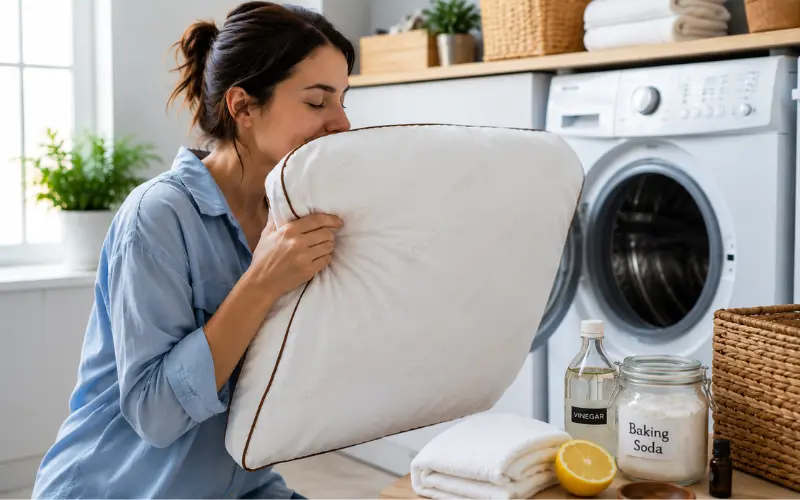
Manufacturers don’t design pillows to last forever.Most will lose their shape and support within 1-2 years, except for latex and buckwheat, which last longer. If your pillow is flat, lumpy, or yellow, it can’t support your neck. If it doesn’t pass the fold test, or if you’re folding it every night to get comfortable, you need to replace it.
4. You’re Stacking Two Pillows
Layering pillows on top of each other is like added support, but it often results in problems. Two soft pillows that are not level can cause your head to tilt and slide during the night. Also, stacking will elevate the head too far, causing the neck to bend forward. Two people who are trying to guess at it are not as effective as one at the right height. Too thin is too low, not too few.
5. It Doesn’t Match Your Mattress
Pillows and mattresses go together. A soft, sinking mattress allows your shoulder to sink, which means your neck doesn’t need to be as high. A firm one will keep your shoulder high, and you will need more pillow. Replace your mattress or put a memory foam cover on it, and your old pillow might feel like a different size.
6. It’s Wrong for Your Sleep Position
How you sleep determines what kind of pillow you need. Side sleepers require space for the head to stay flat. Back sleepers require light support of the curve of the neck. Stomach sleepers require little to nothing, as a thick pillow will push the head back and turn the neck to one side for hours. Even a good pillow will not help if you sleep on your stomach with your chin towards your chest or if you turn your head to one side.
Which Pillow Type Is Best for Neck Pain?
A cervical contour pillow is the initial best step to aid neck pain. The elevated edges gently hug your neck and hold your head in place. Shape is not the only factor; the filling does too. All materials have their own properties of support, heat retention, and different sleeping preferences. Here’s how the main options compare:
|
Pillow Type |
Support for Neck |
Good to Know |
|---|---|---|
|
Cervical contour |
Excellent, holds head in |
Shaped to support the neck; takes a night |
|
Natural latex |
Firm and springy, holds |
Durable and cool; avoid if you have a latex |
|
Memory foam |
Moulds to your head |
Great contouring but can trap heat and |
|
Buckwheat hulls |
Firm, fully adjustable |
Add or remove hulls to set height; good |
|
Feather and down |
Soft, needs frequent |
Cosy but flattens fast; not ideal if you have |
|
Mixed or shredded |
Adjustable, varies by fill |
Often has a gel insert for cooling; support |
Contour and latex are best for neck pain as they will stay in place throughout the night. Memory foam moulds to you, but if you’re a hot sleeper, it can make you feel restless. Buckwheat provides complete control of the height, which is useful when you don’t have a pillow that fits on your own.
How Long Until a New Pillow Stops Hurting?
Allow for a week or two before you make a judgment on a new pillow. Your muscles find the cervical pillow or foam pillow awkward at first because they have not supported your head in that position before. While your neck adjusts, it may be stiff on the first or two nights. If pain gets worse or hasn’t eased after two weeks, the pillow probably isn’t right for you.
Test it correctly during that time period. Rest in your normal position and make sure that your head level remains level. If you wake up less and sleep deeper, it’s a sign that the support is right for you. It may take some trial and error to get it right, but don’t give up after one bad night.
When Should You See a Chiropractor or Physiotherapist?
If your neck pain persists for more than a couple of weeks, recurs, or has warning signs, see a professional. If you experience pins and needles in the arms or hands, headaches, shoulder pain, or numbness, it indicates the issue is not a bad pillow. A chiropractor or physiotherapist can determine what is really happening.
A fresh pillow stops the strain a pillow places. You cannot correct a nerve problem, an old injury, or years of bad posture with it. A physiotherapist tests the function of your neck and pinpoints areas of pain in an assessment. Manual therapy and a personalized exercise program may restore strength and stability. If pain is interfering with sleep or daily functioning, make an appointment to check; don’t wait.
Key Takeaways
- If stiffness plagues your sleepy head in the morning and improves by midday, your pillow is definitely the culprit.
- It is mainly due to height. Your head should stay level with your spine, whatever position you sleep in.
- Don’t match your pillow to your sleeping position, your sleeping position to your mattress, or your sleeping position and pillow to habit or guesswork.
- Change worn pillows every 1-2 years and avoid using two thin pillows.
- Consult a chiropractor or physiotherapist if there is numbness, headaches, or pain that persists for more than two weeks.
Final Thoughts
If you continue to get sore in the morning, don’t ignore it. Once you know the pattern, it is easy to spot a pillow that hurts your neck, and it is generally easy to fix. Look at the height, firmness and age, and compare it to your own sleeping style. Those mornings will be right and pain-free when you have the right pillow. And when the pain doesn’t go away after you’ve sorted your pillow, a chiropractor or physiotherapist can help you discover what is truly causing it.
FAQ
The best pillows to use are memory foam pillows or cervical contour pillows. A memory foam pillow conforms to the shape of your neck, whereas the cervical pillow is intended to maintain the natural curve of the spine. Latex is also solid — firm, supportive, and lasting.
Consider pillow size for sleeping position. Side sleepers should have a thicker and firmer pillow. Medium height and a slight neck curve is ideal for back sleepers. Stomach sleepers should avoid a thick pillow or use a thin one. Neck pain is typically due to the wrong loft.
When lying on your back, place a rolled-up towel or small pillow under your neck, not under your head. It helps to support the cervical curve and relieve the tension in the muscles at night. Simple yet effective.
If one sleeps on one’s stomach, they might not need a pillow. No pillow for back or side sleepers: Your neck goes out of line all night, making it more painful, not less. If your pillow doesn’t feel right, change it out instead of taking it out.
A cervical memory foam pillow. It maintains a neutral spine position, helps eliminate pressure points, and never flattens in the morning. Side sleepers require a higher loft, and back sleepers will find a medium contoured shape better.