How Often Should You Replace Your Pillows? The Complete Guide

The dirtiest thing in your bedroom may be your pillow. A study published in the journal Allergy by University of Manchester researchers found over one million fungal spores inside a single used pillow — along with 4 to 16 different fungal species. But the majority of the population uses the same pillow for at least five years, without a second glance. So, how often should you replace your pillows? You should replace bed pillows every 1 to 3 years, depending on the material, how well you care for them, and your sleeping position. An inexpensive polyester fabric can flatten in 6 months. A good latex pillow can last up to 5 years.
The true solution depends on what material makes up your pillow, how it feels right now, and whether your body has been sending you signals you’ve been ignoring. We have experimented with 47 pillows of all major types of materials in our team within the last 18 months, tracing the loft retention, firmness changes, and hygienic indicators at 3-month intervals. We will guide you to know when precisely you need to change yours, and even when you need to know whether it is time.
How Often Should You Replace Your Pillows? (The Short Answer)
Change your pillows after 1–3 years. It is the general principle that most sleep experts recommend and it overlaps with the replacement cycles recommended by the Sleep Foundation. It will depend on the material of your pillows, your sleeping posture, and the way you keep your bedding clean.
The short version is as follows. Memory foam pillow and standard foam pillow actually last 2–3 years. Down and feather pillows last 1 to 3 years when they are well-maintained. Synthetic and down alternative pillows are the quickest to go flat, in most cases, in a period of 1–2 years. When you cannot recall when you purchased your present pillow, then that in itself is a good indication that you need a new one.
A pillow that no longer fits, is stuffy or leaves you with a sore neck in the morning is not fulfilling its role. There is no best pillow in the world that does not go out of date. We will find that many people will keep pillows up to 5-10 years, which is way too long for any material. The quality of your sleep, your skin and your spine are all hurt when you push a pillow beyond its life cycle.
Pillow Lifespan by Material Type
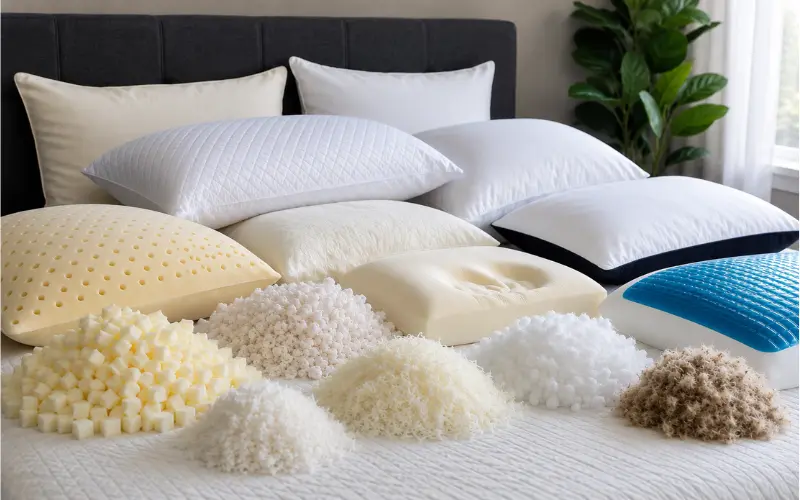
All pillow materials will not age the same. Some can be flattened with nightly use, and others can last years. Our test and research have broken it down into the following.
Pillows made of polyester are the cheapest but also the least durable. Expect 6 to 18 months until the fill becomes lumpy and the pillow flattened. They are good as pillows in a guest room, but not a lasting investment for your main bed.
Down alternative pillows are made of synthetic microfiber or fiberfill in place of actual down to give the same softness. Their duration is usually 1-2 years. People who suffer from allergies use them because they are hypoallergenic and washable. But the fill is quicker than natural materials.
Down and feather fills are in the middle of the lifespan range. An excellent goose down pillow can last 2-3 years with proper care, and in some cases, longer. Duck down will wear a little faster. The trick is to fluff often and cover the pillow with a protector to avoid the destruction of the clusters by moisture and oils.
The memory foam retains its shape between 2 and 3 years. Shredded memory foam is more adjustable, and it has more air flowing through it, but it also compresses at an equal rate. The foam slowly becomes unable to shape to your head and neck, resulting in reduced support in the long run. The rigidity begins to change in our experience at a point of about 2 years.
The most durable traditional material is latex pillows, particularly those made of natural latex or Talalay latex. They have an average lifespan of 3 to 5 years, of lifespan and high-quality versions take even more. Latex is naturally dust mite and mold-resistant, which also provides it with a hygiene advantage.
The outliers are buckwheat pillows. Manufacturers stuff these hard, adjustable pillows with buckwheat hulls, and they can last 5-20 years. The hulls do not compress as foam or fiber does. You can replace the hull filling now and then without necessarily purchasing a new pillow.
|
Pillow Material |
Average Span Life |
Best For |
|
Polyester |
6–18 months |
Budget, guest rooms |
|
Down Alternative |
1–2 years |
Allergy-prone sleepers |
|
Down / Feather |
2–3 years |
Softness, hotel feel |
|
Memory Foam |
2–3 years |
Contouring, pressure relief |
|
Latex |
3–5+ years |
Durability, allergy resistance |
|
Buckwheat |
5–20 years |
Firm support, longevity |
Pro Tip: Although a material that covers the pillows may have a rating of 3 or more years, you should check it every 6 months. In damp weather or when you sleep so hot and sweat at night, materials spoil more quickly.
9 Warning Signs It’s Time to Replace Your Pillow
Your pillow will not notify you when it is time to replace it. But your body will. The following are nine indicators that we check when we test, and you should observe when you are at home.
1. You Wake Up With Neck or Shoulder Pain
This is the most typical red flag. A pillow that has lost its contour will not be able to hold your head and neck in line with your spine. This comes first to side sleepers who need an additional height to fill the gap between the shoulder and ear. When you are getting up with a stiff or sore neck, it can be due to the breakdown of the support of your pillow.
2. Your Pillow Fails the Fold Test
Half-fold your pillow, and release it. A healthy pillow springs easily back to its original shape. When it remains in a folded form – or unfolds gradually and appears deflated – the fill has lost its bounce. This is a down, feather, and synthetic fill fold test. It does not apply to solid memory foam or latex, which do not change their shape.
3. You’re Sneezing or Congested Every Morning
Waking up with a stuffed nose, itchy eyes, or sneezing all the time is a good indication that there is some accumulation of allergens in your pillow. The dust mites, their feces, mould spores, and dead skin cells pile up in each pillow over time. When you wake up with your allergy symptoms and feel better after you get out of the bedroom, then your old pillow is a possible suspect.
4. Your Pillow Is Lumpy or Has Flat Spots
Wipe your hands on the surface. Ugliness is a bumpy fill that does not move evenly, or the center has been pounded into a pancake – the internal structure has lost its life. You should not always have to re-design your pillow to be able to sleep on it.
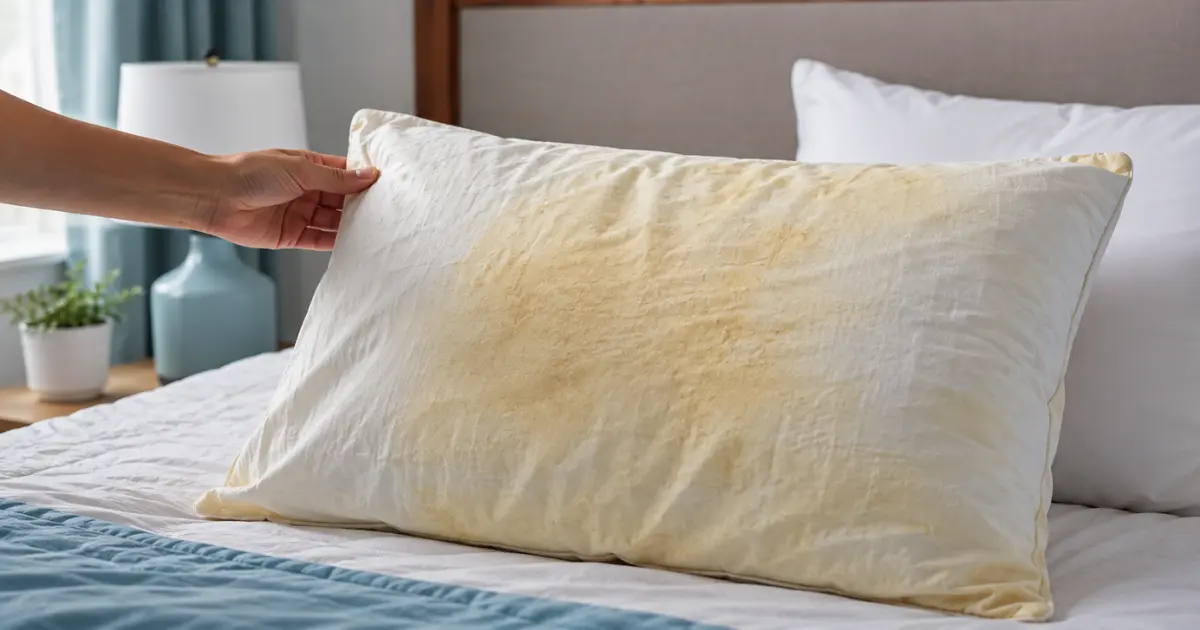
5. Visible Yellowing or Stains That Won’t Wash Out
Yellow stains are caused by sweat, body oils, and saliva that seep through your pillowcase as time elapses. Light discolouration is normal. But extensive, permanent yellowing, which remains after washing, indicates that the fill has absorbed a lot of moisture. Moisture is food to bacteria and mould.
6. Your Pillow Smells Even After Washing
Formidable smell following a good wash is an early indication of retirement. Bacterial and fungal colonies cause the odor at the depths of the pillow stuffing. Once they have established themselves, surface cleaning cannot able to reach them. When your pillow is musty or stale when you wash and dry it, then it is over.
7. You’ve Changed Your Sleep Position
B2S or back to side? Or pulled aside to the stomach? Your previous sleeping position was correlated with your old pillow. Side sleepers need a stiffer, higher-loft pillow. Stomach sleepers require something soft and smooth. As you change position, so should your pillow requirements.
8. You Constantly Re-Adjust Your Pillow at Night
When you toss and turn half the night, pressing your pillow, or piling two pillows to get comfortable, then your body is telling you that you are not getting the necessary support. A good pillow must allow you to sleep and be comfortable at night without rushing.
9. You Got a New Mattress
A fresh mattress alters the way your body gets engulfed in the bed. This changes the degree of inclination of your neck and the type of elevation you require off your pillow. Using a new mattress with an old, battered pillow can leave the worst neck alignment that is possible. When you change your mattress, consider changing your pillow.
|
Warning Signals |
What It Means |
Action |
|---|---|---|
|
Neck/shoulder pain |
Lost support |
Replace now |
|
Fails fold test |
Fill degraded |
Replace now |
|
Morning allergies |
Allergen buildup |
Replace or deep clean |
|
Lumpy/flat spots |
Structural breakdown |
Replace now |
|
Permanent yellowing |
Moisture saturation |
Replace now |
|
Persistent odor |
Bacterial/fungal growth |
Replace now |
|
Changed sleep position |
Wrong pillow type |
Replace with correct type |
|
Constant re-adjusting |
Inadequate support |
Replace now |
|
New mattress |
Height mismatch |
Evaluate and likely replace |
What Happens If You Don’t Replace Your Pillow?
It is not only uncomfortable to hang onto an old pillow, but it also has the potential to impact your health. Here is what accumulates in a pillow that you sleep on.
Dust Mites and Allergen Buildup
Pillows are the habitat of dust mites. They consume dead skin cells – you lose about 1.5 grams every day, as per the American Academy of Dermatology – and reproduce in warm, humid places. The Ohio State University study on the accumulation of allergens indoors found that after two years of nightly use, dead mites and their droppings can account for about 10 percent of a pillow’s weight.
The Asthma and Allergy Foundation of America states that about 20 million Americans are allergic to dust mites. The allergy is highest when you are sleeping, and your face is nearest to the pillow. Mite waste contains proteins that cause nasal congestion and sneezing, up to asthma attacks. The symptoms are most likely to be the strongest in the morning since you have been breathing right next to the source, i.e., 7 to 8 hours in the morning. Dust mites in your pillow and bedding could be a trigger when your morning stuffiness clears an hour after you wake up.
Bacterial and Fungal Growth
The University of Manchester research, which was published in the journal Allergy (Woodcock et al., 2006), tested pillows aged between 1.5 and 20 years. Each of the pillows had millions of fungal spores, one of which, Aspergillus fumigatus, is a fungus that the CDC links to severe respiratory infections in immunocompromised people. Synthetic pillows, in fact, were a better home to more fungi species as compared to feather pillows.
Bacteria such as Staphylococcus and Cutibacterium acnes (formerly Propionibacterium acnes) colonize old pillows—the bacterium most commonly linked to acne. The damp interior is warm and serves as an incubator. Frequent washing is beneficial, but it cannot completely undo years of biological accretion. The stuffing in itself is a reservoir.
Acne and Skin Breakouts
You have a pillow that is pressing your face for hours at night. Liquids of the body, sweat, saliva, and the remnants of hair products drip into the fill. In the long run, this forms a layer that can block pores and irritate skin. Jawline and cheek breakouts, the areas that are making direct contact with your pillow, usually go away when you change your pillow.
It can be helpful to replace your pillowcase regularly. But it will not prevent the soaking of the deep into the pillow itself. In case you have a problem with chronic facial acne, your old pillow might be adding to the problem more than you think.
Neck Pain, Headaches, and Poor Sleep Quality
A pillow that has lost its loft will cause your neck to take a position that is not natural. For side sleepers, the head is too low, which presses on the neck backward. In the case of back sleepers, a flat pillow will pull the head backwards, overworking the cervical spine. In both cases, it can result in chronic neck pain, headaches in the mornings, and disturbance of sleep.
The Bottom Line: A tattered pillow sparks off. Poor spinal alignment is caused by poor support. Suffering disrupts your bedtime. Sleep fragmentation affects mood, concentration, and immunity. One of the most inexpensive yet impactful upgrades you can make to improve your sleep health is replacing a worn-out pillow.
How to Choose the Right Replacement Pillow
The three factors that determine the best pillow that fits your needs are how you sleep, what your body requires, and how much you can afford to spend.
By Sleep Position
The loft and firmness of your pillow are dependent on how you sleep. Side sleepers require a high-loft, thick, and firm pillow. The space between your ear and shoulder is quite big, and the pillow has to occupy this space to ensure that your spine is neutral. A medium to extra firm is optimal. Seek the best memory foam pillows or latex pillows that are high enough to hold the neck up without leaning the head. Medium-loft pillows are the best fit for back sleepers as they allow the natural curve of the cervical spine. Too thick propels the head forward. Also, skinny causes it to fall back. A popular option here is memory foam that is contour-shaped.
Stomach sleepers must have the lightest and softest pillow they can have, or none at all. A large cushion forcibly hyperextends the neck. A low-loft pillow is used to avoid strain.
By Health Needs
When you are allergic or asthmatic, opting to use hypoallergenic materials such as latex, memory foam, or buckwheat is preferable. These are naturally resistant to dust mites. Combine them with a hypoallergenic pillow protector or zippered encasing to make a complete barrier.
You can use a contoured pillow or cervical support pillow to ensure proper alignment in case of chronic neck pain. The foam of memory and latex shape to the contours of your neck and head, giving uniform pressure relief during the night.
By Budget and Longevity
Lifespan is directly related to budget. Polyester pillows cost between $10 to 20 but require replacement after a year. A natural latex pillow costs between 60 and 120 dollars and lasts between 3–5 years. In the span of five years, the latex pillow is, in reality, cheaper to sleep on.
Buckwheat pillows are even more advantageous in the long term. A natural latex pillow costs between $ 60 and $ 120, yet it has a lifespan of 3 to 5 years. Down pillows are in the mid-range in both price and lifespan. Good quality down pillows cost between 50 and 150, and last between 2 and 3 years.
The bottom line: Invest more in long-lasting resources, and you will not have to change as frequently.
How to Extend Your Pillow’s Lifespan
Proper care of pillows extends the life of the pillow by months, sometimes years. The five habits are the most significant ones.
Use a Pillow Protector
The best investment to make in order to increase the life of your pillow is a pillow protector. It forms a line between the pillow case and the pillow itself, preventing the reach of sweat, oils, dead skin, and dust mites to the fill. Find breathable zippered pillow covers that have a tight weave. Clean the protector after every 2 to 4 weeks. Additional hygiene is provided by many pillow protectors that prevent bed bugs as well.
Wash Your Pillow Regularly
A majority of down, down alternative, and polyester pillows are machine washable. Clean them after every 3-6 months in a light cycle with a soft detergent. Dry completely – partially dried leaves promote the growth of molds. In the case of memory foam and latex, only spot-clean. Never put solid foam in a washing machine. Proper washing of pillows can greatly increase their lifetime.
Fluff and Rotate Daily
Take 10 seconds in the morning, fluffing your pillow. This redistributes the fill, eliminates clumping, and regains loft. In the case of down and down alternative pillows, shake them and punch them a few times to loosen up clumped-up groups. Roll your pillow up and down at least once a week to even out wear.
Air Out Your Pillows
Take your pillows outside every month in the fresh air and indirect sunlight for a few hours. UV light kills bacteria and mites. The circulation of air aids in evaporating held moisture. This can be particularly beneficial in wet climates where there is a greater risk of mold. Turn the pillow halfway to get equal exposure.
Avoid Sleeping With Wet Hair
Taking a shower before going to bed leaves a lot of moisture in your pillow. That humidity stimulates bacterial growth, fungal growth, and material degradation. It also results in quicker yellowing. Should you shower at night, have your hair completely dry before you go to sleep, or consider a moisture-wicking pillow cover that is breathable and an added layer of protection?
What to Do With Old Pillows
Don’t simply discard your old pillows. Consider available options.
Old pillows make good pet beds, floor or garden kneeling cushions, packing materials for moving, or donations to animal shelters. To recycle the pillows in poor condition (e.g., stained, smelly, or lumpy), check whether your local recycling program accepts textile waste. Pillow stuffing materials can be processed in many facilities. Some bedding retailers have take-back programs. Foam and polyester fills are seldom recycled in the curbside recycling system, and your best bet is a textile drop-off.
One thing to avoid: Most charities do not accept used pillows due to hygiene concerns. Call ahead if unsure.
How Often Do Hotels Replace Their Pillows?
Hotels turn over their pillows much more often than households: budget and mid-range hotels turn theirs over every 12 to 24 months, while luxury hotels turn theirs over every 6 to 12 months to ensure a high-quality guest experience.
According to a Hilton Worldwide representative, synthetic hotel pillows have a lifespan of 18 to 24 months, compared to down or feather pillows, which have a lifespan of 24 to 36 months. Nevertheless, a study of over 50 high-end properties in the industry found that the median age of pillows was more than 7 years, well above the recommended age.
Hotels also require pillow covers and commercial laundry to extend the hygiene of a pillow between changes. Bed bugs and allergens are blocked by zipper-enclosed industrial-grade protectors. When a hotel collection is unable to store pillows for more than 2 years with professional care, it is a strong indication for home users. You need to change even your pillow, which you use each night, on a similar schedule.
The takeaway: Assuming five-star hotels change their pillows every 1-2 years, having one at home you have owned for over 5 years isn’t doing your sleep any good.
Special Cases: When to Replace Sooner
Particular circumstances demand a more rapid change of pillows than the 1-3 year average.
Allergy and Asthma Sufferers
Even with proper care, you should replace pillows at least once a year if you are allergic or asthmatic. Mites, mould, and pet dander promote the build-up of allergens. An anti-allergy pillow is made of hypoallergenic latex or memory foam, with an antimicrobial pillow protector that helps but does not completely prevent accumulation. The quality of your sleep requires maintaining a low exposure.
Children’s Pillows
The children sweat more than adults, in proportion to their size, and they often lack a pillow protector. Change children’s pillows every 6-12 months. Select washable, hypoallergenic materials, and use simple, safe materials. Avoid anything that has had a lot of chemicals applied or that is strongly scented due to off-gassing.
After Illness
If you have been ill with a respiratory infection, the flu, or any other contagious disease, wash your pillow. If the pillow is not washable, replace it. Bacteria and viruses can be present in warm and moist fields. This is one of the cases when it is not a choice of replacement, but a precautionary one.
Pets Who Share the Bed
Pets add fur, dander, saliva, and other outdoor allergens to your bed. When your dog or cat usually sleeps on or near your pillow, you should anticipate replacing it twice as often. In this case, a durable, washable pillow protector is necessary. Still, the additional moisture and biological content will shorten your pillow’s lifespan, despite protection.
Final Verdict
What is the frequency of replacing your pillows? Most materials last 1-3 years, except for latex and buckwheat, which have a longer lifespan. Don’t put off till your pillow is flat, yellow, and smelly. Self-examine every 6 months using the fold test and notice any new morning pains or congestion.
One of the easiest ways to sleep better and wake up feeling rested is to use a fresh pillow. It is cheaper than a good night out, and it makes a difference every night of your life. The build-up of allergens has a measurable impact on sleep quality, mechanical support, and the presence of allergens in ancient pillows. It is time to replace your next pillow if it has been more than two years since your last replacement or, in case any of the red flags above are familiar to you.