Best Sleeping Position for Neck Pain and Back Pain

You spend roughly a third of your life in bed, meaning your sleep posture can greatly impact how your spine feels every morning. Waking up stiff or sore is usually due to the position. The best sleeping position for neck pain and back pain keeps your head, shoulders, and hips in line so your neck muscles and back muscles can rest. In this guide, you will see each position, the specific pillow and mattress setup it is accompanied by, and how to avoid common mistakes.
What is the best sleeping position for neck pain and back pain?
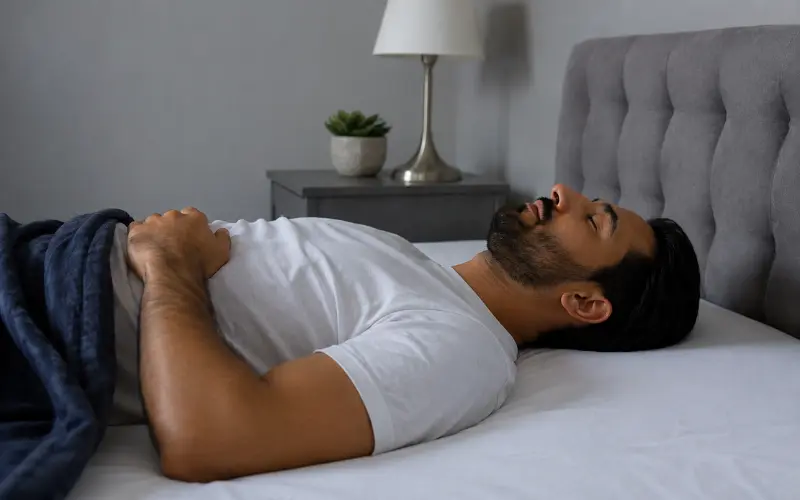
Back sleeping (supine position) with a medium-loft pillow under the head and rolled blanket under the knees is the best sleeping position for neck pain and back pain. Sleeping on your side (lateral position) with a pillow between your knees is a close second. Both have a neutral spine, meaning that your ears, shoulders, and hips remain in line.
A neutral spine is where the spine maintains the natural spinal curve (inward at the neck, outward at the upper back, and inward at the lower back). These curves support your spine, and your spinal discs, ligaments, and joints distribute weight evenly. Rapid self-assessment: lie down and slide a hand under your lower back. If there is a big distance or no distance between the pillows, move them around until the pressure is even.
Why does your sleep position affect neck and back pain?
Sleep position is important as your body repairs itself during sleep. In deep sleep, the heart rate and blood pressure decrease, muscles relax, and hormones facilitate healing, tissue growth, and blood vessel repair. Your white blood cells involve themselves in your immune system, and your spinal discs absorb fluid.
That’s the reason you’re a little taller in the morning, because this disc rehydration occurs. The discs absorb water overnight so the discs regain their height and relieve pressure on surrounding nerves. A poor position blocks this process. Without restful sleep, muscles remain tight, and the nervous system is alert, which means that the pain carries over to the next day.
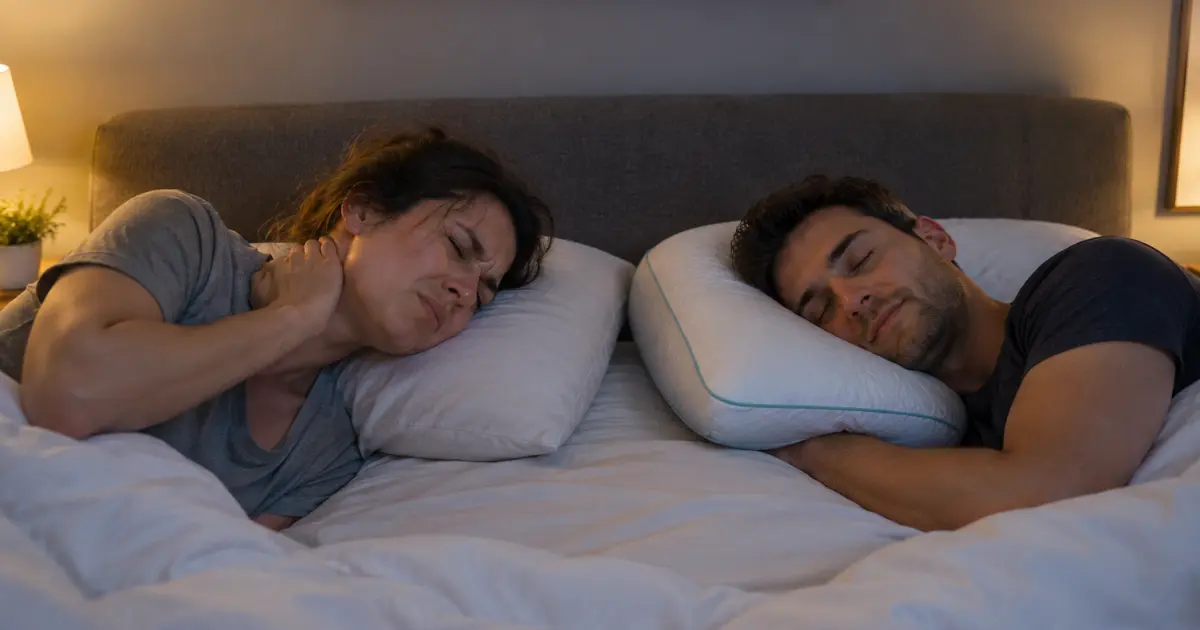
Poor posture is also a vicious cycle. Neck strain or a compressed lower back causes the small stabilizing muscles to remain active all night. Your body never gets the muscle relaxation it needs, and the joint stiffness and pain return in the mornings. Fix your position to keep the spine still and aligned for recovery.
How to sleep on your back for pain relief (supine position)
Sleeping on your back spreads the weight of your entire body evenly and keeps your spine in its natural S-shape, making it the best option for your back. Use a medium-loft pillow under your head to avoid pushing your chin toward your chest and a pillow or rolled blanket under your knees to relieve the pelvis and maintain the lumbar curve.
Place a small lower back pillow or rolled towel under the lower back for extra support. If you have neck pain, a cervical pillow that has a depression for your head will help, as it will not elevate your head too high and support the cervical spine. The right height will keep your neck in a neutral position, which is why it is important to match your pillow to your build and mattress. Our pillow loft guide will help you nail down that number.
Doctors recommend that people with lower back pain, general stiffness, and back pain sleep on their backs. The problem is that it can make snoring, sleep apnea, and blockages in the airways worse. If that’s the case, go for an incline position or sleep on your side. This position is much easier to maintain with a supportive pillow for back pain.
How to sleep on your side without waking up sore (lateral position)
Side sleeping is okay as long as the pillows fit between your ear and shoulder, and keep your neck in line with your spine. Place a pillow between your Knees or a full-length body pillow to prevent your top leg from moving your hips and pelvis out of alignment. This one adjustment is responsible for the majority of side-sleeper back pain.
The height of a pillow is more important here than in any other position. If you make it too flat, the head hangs down; if you make it too high, the neck curves upwards. Since sleeping (lateral position) typically requires a higher loft pillow than sleeping on your back, be sure to refer to the pillow loft chart. This is the correct pillow height that maintains throughout the night for those with neck pain.
Pay attention to arm position! If you push the arm against the chest, this may compress the shoulder joint, resulting in numbness or tingling. Instead, the lower arm stays extended forward. Sleeping on the left side helps alleviate acid reflux and GERD, and also promotes better blood flow to the baby while pregnant. To avoid muscle imbalance, alternate sides across the week. Using a body pillow, maintaining alignment is easy.
Is the fetal position good for back pain?
The fetal position can help with some back issues by creating space between the vertebrae. When lying on your side with your knees pulled toward your chest, the spinal canal widens, relieving compression of the nerves caused by a herniated disc or spinal stenosis. Use a pillow between your Knees to maintain a level pelvis.
The Key is a loose curl, not a tight ball. A hard C-curve around the upper back stretches the neck and hinders breathing of the diaphragm. Maintain a slight bend in the back and a straight neck.
This position isn’t ideal for everyone. A straight side position with a supportive pillow is generally more comfortable and will prevent stiffness if you do not have disc-related radiating pain. During a flare, people with degenerative disc disease may find relief in the fetal position, but return to their normal position when symptoms subside. Try it for a few nights and listen to your body; don’t push the shape.
Why stomach sleeping makes neck and back pain worse (prone position)
Stomach sleeping (prone position) is the most difficult position on your spine and is the position to avoid if you have neck pain or back pain. It makes your head turn sideways for hours, which puts strain on your neck and misalignment in your cervical spine. It also straightens the curve of the lower back and applies pressure to the lower back.
Extending the arm overhead in the prone position may stress the shoulder joint and cause rotator cuff strain. This stress over time leads to chronic pain and stiffness in the morning. One small exception is that in mild cases, positional therapy may help you reduce snoring or airway obstruction by sleeping on your stomach.
If you are unable to switch immediately, cushion the blow. To reduce neck rotation, use a very thin pillow or none at all, and to restore the lumbar curve, slide a flat pillow under the pelvis. Then work on transitioning. A full-length body pillow wrapped around your front helps your body feel like it’s in a safe side position as you retrain your habit.
What is the best sleeping position for upper back and neck pain?
Back sleeping with a medium loft or cervical pillow that supports the cervical spine without tilting the head forward is the best sleeping position for upper back and neck pain. This will help to keep the thoracic spine and neck muscles relaxed. Sleeping on your side with the right pillow height is a good option.
Don’t use two pillows. This forces your head into a forward head position, compresses the upper back, and simulates the “text neck” that comes from screen time. One properly sized pillow is better than two flat pillows. You can get some thoracic spine support by placing a rolled towel just below your neck.
What you do during the day reflects in your sleep. Spending hours on the phone or laptop can shorten chest muscles and put strain on the upper back, which means that this habit brings postural asymmetry to bed. Combine a good posture with frequent breaks to change your posture throughout the day. If your pillow flattens quickly or develops a lumpy feel, you should replace it; a worn-out fill commonly causes upper back and neck pain.
Best sleeping positions by condition
Different setups are effective for various conditions. The table below links common problems with a suggested position and a quick tip. Use it as a guideline and then make adjustments for comfort.
|
Condition |
Best position |
Practical tip |
|---|---|---|
|
Herniated disc |
Fetal or back with Knee support |
Loose curl or rolled blanket under Knees to open disc space |
|
Sciatica |
Side with pillow between knees |
Sleep with the sore leg on top to ease radiating pain |
|
Spinal stenosis |
Fetal or reclined |
Curling opens the spinal canal and lowers nerve |
|
Acid reflux/GERD |
Left side or slight incline |
A wedge pillow or raised head reduces reflux |
|
Sleep apnea / snoring |
Side or elevated |
Side sleeping cuts airway obstruction |
|
Pregnancy |
Left side |
Improves circulation; a pregnancy pillow supports the bump |
|
Scoliosis |
Back or side, neutral |
Keep the spine straight; alternate sides for balance |
|
Fibromyalgia |
Back with full support |
Cushion pressure points to limit chronic pain |
Some clinicians use the Webster Technique to assist with the alignment of the pelvis for pain associated with pregnancy. Check with your provider if it’s right for you.
Do your pillow and mattress matter?
Your pillow and mattress determine if any position is neutral spine. The pillow determines the position of your neck, and the mattress determines the position of your hips and shoulders. Wrong, and even back sleeping doesn’t work. Medium-firm mattresses are best for back and stomach sleepers, and side sleepers may prefer medium-soft mattresses to alleviate pressure points.
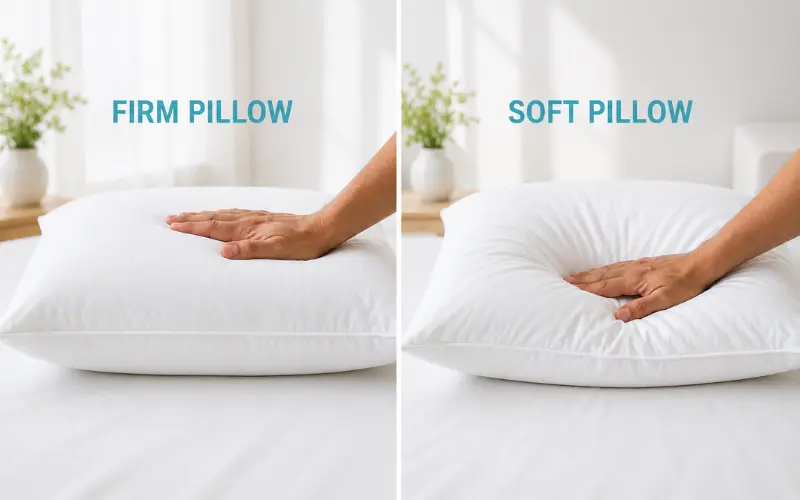
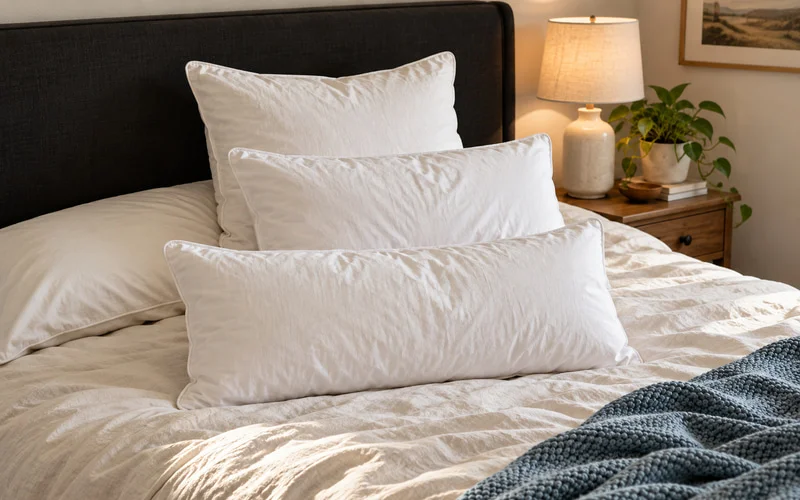
The loft and firmness of the pillows should be in harmony with the position and body. Rather than repeat the numbers here, see the detailed pillow loft guide, and compare options in our roundup of the best pillows for each sleep style. The type of filling is also important: a memory foam pillow will mold to your head and neck, a latex pillow will remain firm, and a buckwheat pillow will provide firm, adjustable support.
Elevation is beneficial for reflux, apnea, or spinal stenosis. A wedge pillow, adjustable base mattress, or angled wedge elevates the upper body without stressing the neck. Sleeping in a recliner can treat acute flares. The right pillow for neck pain can be the single most important adjustment if you suffer from neck pain.
How to train yourself into a better sleep position
It will take patience to change your sleeping position as habits run deep. It takes 2-4 weeks to feel natural. If you tend to roll onto your tummy, use a body pillow as a physical barrier to prevent you from rolling, and begin each night in your desired position, even if you fall out of it.
Stretch the back muscles before going to bed, which will help to relax them and make alignment easier. Stretch the spine with child’s pose, supine knee-to-chest stretch, and gentle cat-cow movement. Keep it light; this is about muscle relaxation, not a workout. The environment you sleep in also affects the quality of your sleep. Your body produces melatonin in a cool room temperature, and with less screen time before bed, you fall asleep more quickly and move around less. Don’t sleep on the couch, as it puts a C-curve in your spine. Do not jackknife up in the morning. Turn onto your side and use your arms to roll up and avoid aggravating your lower back.
When should you see a doctor for neck or back pain?
If pain persists for more than a couple of weeks, persists through the night, or is accompanied by numbness, tingling, or a shooting sensation down an arm or leg, see a professional. These may indicate nerve compression or a disc condition that a sleep aid position cannot treat. If a person suddenly becomes weak or cannot control their bladder, they should not ignore this.
Depending on the reason, you can take a number of paths. Physical therapy helps to strengthen and correct posture. For some, chiropractic care and a spinal adjustment might help relieve some spinal alignment issues and help the nerves function. When snoring or daytime sleepiness suggests the possibility of apnea, inquire about sleep studies.
A clinician may seek to understand the underlying cause of the pain, whether it’s muscle imbalance, arthritis of the joint (osteoarthritis), or a degenerative disc (DDD), and create a plan for treatment to include postural guidance. The care will be most effective when combined with sleep changes. Chronic pain or recurring pain means you will save yourself months of trial and error with professional input.
Final Thoughts
The optimal sleeping position for neck pain and back pain is based on a simple concept — keeping the spine in a neutral position to allow it to rest and repair. You should support these best on their backs with knee support and on their side with a pillow between the knees, but not on their tummies. Try to find a pillow that matches your mattress and your body, and let your body acclimatize for a couple of weeks. Every night makes a difference, leading to a much less stiff and painful morning.
FAQ
A medium-loft pillow and rolled blanket under the Knees is the most versatile position. It maintains a straight back and distributes weight evenly. Side sleeping with a pillow between the knees is almost as good and better for snorers.
Usually not. Not using a pillow causes the head to fall back on the back or to the side, stretching the cervical spine. The majority of people will require a supportive cervical pillow of the appropriate height. Little or no pillow is only good for some stomach sleepers.
It takes 2-4 weeks of regular practice for most people. Each evening, begin the night in your desired position and block out old habits with a body pillow. The improvement occurs gradually, so how your neck and back feel in the morning will determine the success.
Any side will do for spinal alignment if your pillow ‘Keeps your neck level’. Left side works well for acid reflux, GERD, and pregnancy circulation. Rotate which side you use each week, to avoid uneven pressure and muscle imbalance.
Yes. A pillow that is too high, too low, or overly used will cause your neck to bend out of alignment all night long, and negate any positive positioning. One of the easiest solutions is to choose pillow loft and firmness that corresponds with your sleeping style; start with our pillow loft guide.