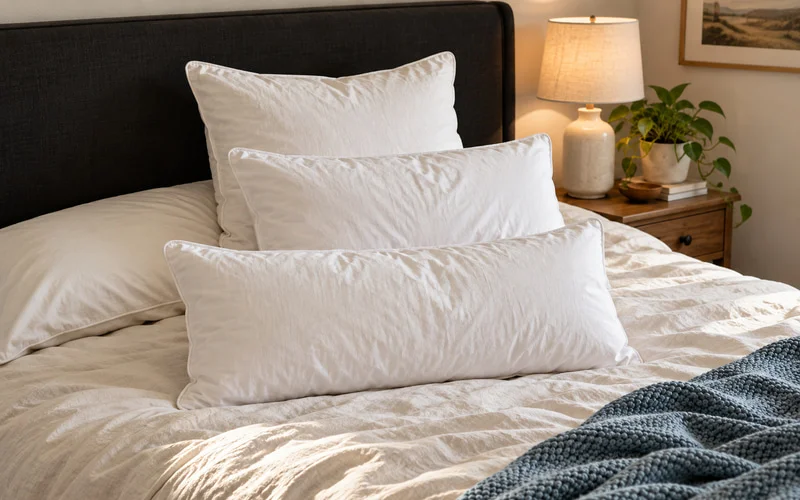
How Many Pillows Should You Sleep With?

You should sleep with one pillow under your head. This one pillow at the correct height for your sleeping position will provide your neck with a better alignment with your spine than any stack ever will. There’s still room for extra pillows, but not under your head. A pillow between the knees is a good option for side sleepers, a pillow under the knees for back sleepers, and a body pillow for pregnant sleepers.
So, the answer to how many pillows you should sleep with is one for the head and as many as two or three more around your body, if your posture requires them. The count is not as important as getting that head pillow right, so that’s why it’s important to pay attention to the pillow loft first.
How Many Pillows Do You Actually Need Under Your Head?
One. One pillow of the right height will maintain your spine’s natural curve in your neck without forcing your chin down to your chest. Polls of sleep habits have found that most adults sleep with one to two pillows, but sleep experts say the second pillow is typically a hindrance when placed under the head.
Here’s the issue with stacking pillows. The two pillows don’t act like one taller pillow. They compress at different speeds, slide apart as you move, and change height multiple times per night. The position of your neck changes as you move. You can sleep in a comfortable position and wake up with a stiff neck, as the top pillow shifted to the side at 3 am.
A stacked setup also tends to cause the head to be too far forward for back sleepers and too high for side sleepers. Both positions stretch the neck out of the neutral neck position and stretch the muscles that cause morning headaches.
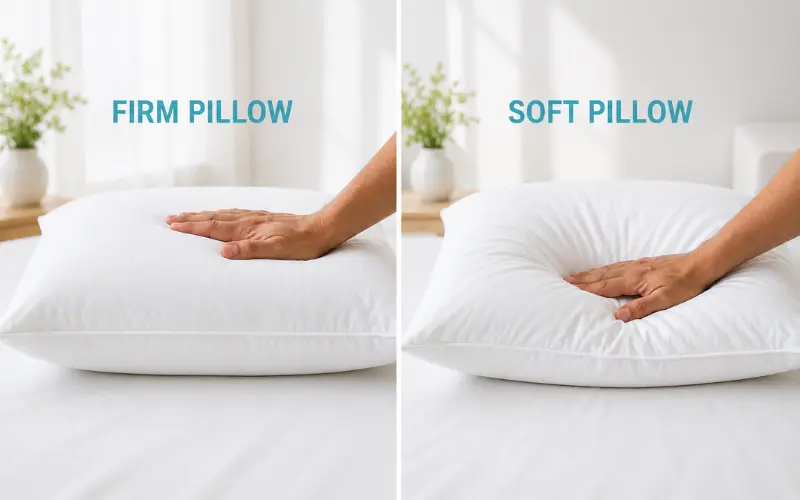
If one pillow is too flat, then it’s a better pillow, not a second one. An adjustable pillow with removable pillow fill allows you to adjust pillow thickness in minutes. If you’re not sure if your pillow is too firm or too soft, this guide on firm vs soft pillows will help you understand the perfect firmness for each position and body weight.
How Many Pillows Should You Sleep With Based on Sleeping Position?
The number of pillows you use depends on your sleep position. Side sleepers will usually need two pillows, back sleepers one or two, and stomach sleepers will need one thin pillow or no pillows. The aim is always to maintain a level head and neck and relieve the strain on the shoulders, hips, and lower back.
Side Sleepers: Two Pillows
Side sleepers require a high-loft (head) pillow to fill in the gap between the head and the mattress, and a second pillow between the knees. This knee pillow prevents the upper leg from falling in front and twists the pelvis, reducing stress to the lumbar region. Typically, those suffering from hip pain or lower back pain experience a difference in just a few nights.
Sleeper pillows made of firmer materials like latex or memory foam pillows will retain their form throughout the night. Talalay latex or cooling gel options are breathable for those who sweat at night. See our pillow for side sleepers guide for specific picks.
Back Sleepers: 1 or 2 Pillows
Back sleepers should use one medium loft pillow under the head, and many find it helpful to have a second pillow under the knees. A small rise in the knees will help to press the small of the back against the mattress surface and reduce pressure on the joints in the lower back.
Try to maintain a head and neck angle of about 30 degrees (this is what doctors call a good head position). A medium firm pillow will maintain that angle without sagging. An ergonomic-shaped knee pillow is better than a bed pillow because it will remain in place during sleep.
Stomach Sleepers: One Thin Pillow or None
For stomach sleepers, use a low-loft thin pillow, or do not sleep with a head pillow at all. If you are taller than average, sleeping this way cranks your neck up and back for hours, which commonly causes neck strain and morning migraine headaches.
A better place for that pillow is under the pelvis or abdomen to diminish the arch in the low back. Some front sleepers may not need anything, depending on the firmness of the mattress and the shape of their body. We cover the pros and risks in detail in our article on sleeping without a pillow.
Combination and Restless Sleepers: One Adjustable Pillow
People who are combination sleepers and move from side to side should avoid the temptation to have a stack of pillows on hand. One adjustable pillow is better because you can adjust it to a medium loft, which is not too firm and not too soft. If you toss and turn, a less cluttered bed with fewer pillows is also for you, as you have less to fight with at 2 a.m. A hybrid pillow that supplies conforming and reactive assistance molds with your movement.
When Sleeping With More Pillows Actually Helps
Additional pillows are justified if they help the body, but not the head. A two, three, or four-pillow setup can actually help sleep in a few cases—during pregnancy, for snoring, for mild reflux, and for shoulder pain—but you must use each pillow for a different purpose.
Pregnancy. Side sleeping is the recommended position, and a pregnancy pillow can make side sleeping sustainable during pregnancy. A U-shaped body pillow will lift the back and belly at the same time, and a C-shaped body pillow or simple rectangular body pillow will cradle the abdomen and fit between the knees. A small wedge pillow under the tummy will help in the third trimester because it takes the strain off the ligaments.
Mild reflux and snoring. An upright posture helps to open the airway and decreases obstruction of airflow. A wedge pillow elevates the entire torso in a fixed position, rather than two flat pillows that bend the neck, and is much more effective. If you have sleep apnea, your doctor has developed a treatment plan for you to follow. Pillows should complement your treatment plan, not replace it. You can raise the head of the bed if you have an adjustable base available, or you can use no pillows.
Pain in the shoulder and arm area. Side sleepers with shoulder pain should hug a pillow under the arm so the top shoulder doesn’t roll forward. A narrow pillow behind the back also helps to prevent the restless sleeper rolling to the sore side during the night.
Signs You Are Sleeping With the Wrong Number of Pillows
Your body tells you the answer in the morning! Stiffness in the neck, dull headaches, numb arm, louder snoring, and new shoulder pain upon waking are all indicators of poor spinal alignment during the night. If you toss and turn more than usual, it’s another sign, as your body continues to search for a comfortable position it just can’t seem to find.
Run this quick check for one week:
- Wake-up symptoms. Record neck, shoulder, or back pain after 30 minutes of waking up. If the pain is gone by mid-morning, it likely isn’t your day; it’s your sleeping setup.
- Pillow position. If your pillow falls out of bed or is folded in the morning, you have the wrong loft or firmness.
- Pillow age. The pillow loses its shape and texture after a certain period of time. They should be replaced every 18 months to 2 years, or sooner if they start to become lumpy. Old pillows no longer provide the pressure relief due to their lack of freshness.
Doctors ask their patients how many pillows they sleep on for a good reason. If someone needs three pillows to sleep comfortably at night, they might have an early indication of a heart or respiratory problem. If you believe your pillow count continues to increase due to breathing issues, inform your doctor at your next appointment.
How Many Pillows Should Be on Your Bed?
Pillows you sleep on, and pillows that dress the bed are two different things. Remove decorative pillows, shams, and accent pillows at night. Only your sleeping pillows stay. For a styling guideline, follow the bed size:
|
Mattress size |
Sleeping pillows |
Decorative pillows and shams |
Typical total |
|---|---|---|---|
|
Twin / Twin XL |
1 |
1-2 |
2-3 |
|
Full |
1-2 |
2-3 |
3-5 |
|
Queen |
2 (standard) |
2-4 |
4-6 |
|
King / Split king |
2 (king pillow size) |
3-5 |
5-7 |
|
California king |
2 king |
4-6 |
6-10 |
Shams in squares behind, accents last, and rectangles in front for sleeping. Don’t overcomplicate the routine: If 8 cushions a night is too much, then decrease. A good bed should never be a bad night’s sleep.
Here’s one maintenance tip for the pillows you sleep on: Wash the pillow covers once a week along with the bed sheets, and wash pillows every four months. Pillow protectors can seriously extend the lifespan of pillows.
Final Thoughts
So, how many pillows should you get to sleep with? Under your head, one that is selected for your position and body type, and body pillows where they are needed in your posture. It’s not about the number; it’s about the quality, and it’s not about the quality; it’s about the placement. If you’re looking for a new pillow, start with our list of the best pillows for every sleeping position.
FAQ
One with a medium loft (3-5 inches). It should fit under your neck without compressing your chin towards your chest. Put a thin pillow under the knees to relieve pressure on the lumbar region.
One pillow of the proper size. Stacking pillows tilts the cervical spine and stresses the neck, leading to stiffness in the morning. Ears, shoulders, and hips should be aligned.
Two. A firm high-loft pillow (4” to 6”) fills the shoulder gap, and one between knees keeps hips level and prevents lower back and sciatic pain.
Yes, or none. A pillow under 3 in. is used to prevent hyperextension of the neck, and a flat pillow is inserted under the pelvis to maintain the neutral position of the lumbar spine.
1 wedge pillow with a 30-45 degree incline. Elevation prevents the tongue/soft palate from blocking the airway. Pillows that are stacked flat bend the neck and increase the obstruction. Side sleeping is also beneficial, but it will never replace CPAP.