Why Does My Pillow Go Flat? The Real Reasons Explained

Your pillow will flatten out because the filling will compress under pressure over time. An adult head weighs 10-11 pounds, and it uses the same pressure for 7-9 hours each night. Throw in body heat and moisture, and the materials in it break down quicker than most people realize.
All pillows will flatten out with time. However, the speed of the loss and whether it is temporary or permanent will depend on what’s inside your pillow and how you maintain it. This guide will tell you how it works, how each type of fill fails, and how to slow it down with a flat pillow.
Why Does My Pillow Go Flat So Fast?
Compression at night easily causes a pillow to lose its shape. Each night, your head will compress the fill and flex the fibers, clusters, or foam cells. Initially, materials bounce back. This repeated stress, over hundreds of nights, causes structural fatigue, and the fill will no longer rebound to its original height.
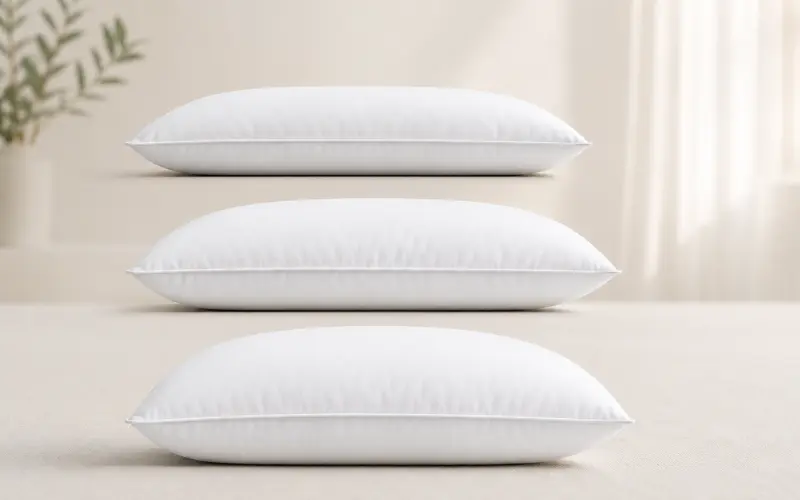
People know that original height as pillow loft, and the ability to retain that loft distinguishes a good pillow from a low-quality pillow. Poor-quality fills lose loft in months. Of course, some materials will last longer than others in retaining their shape, but nothing lasts forever. When it no longer springs back, your pillow’s usefulness may have come to an end. We have an article on when to change your pillow, including timing for each material.
Your speed is also dependent on you. Fuller heads, sleeping on your back (which puts all the weight in one place), and sleeping hot at night all contribute to rapid fill breakdown.
What Breaks Down Inside a Pillow?
The forces that flatten a pillow are mechanical pressure, heat and moisture, and debris. Fill is bent and compacted under pressure. Heat and perspiration weaken fibers and cause them to stick together. Debris helps to compress the fill, even while not lying on it.
Nightly Compression and Head Weight
The main force is the weight of the head. A pillow’s softness and pressure dispersion is lost when 10 pounds is applied to the same spot for a third of a day. Fibres which began erect are pushed sideways. Round foam cells are compressed. Every material has a limit on the number of times it can be compressed before material failure occurs, and hence a pillow used daily will flatten much sooner than a throw pillow used a few times a year or a travel pillow.
Body Heat and Moisture
Heat and moisture increase the rate of everything. On average, a sleeper sweats and breathes out water during the night, and a lot of it is on the pillow. Fiber matting is the loss of stiffness and tangling of damp synthetic fibers. Damp down clusters are sticky and clumpy rather than airy. Heat causes memory foam to become soft, and that’s why foam pillows feel better on warm nights. Hot sleepers flatten pillows out more quickly for this reason, and a pillow that lacks breathability will hold that moisture.
Dust Mites, Dead Skin, and Hidden Weight
An older pillow will be heavier than a new one, and the weight is no picnic: dead skin cells, body oils, dust mites, and the waste products of these mites. This debris covers the fill, depresses it, and obstructs the re-expansion airflow. It is also relevant to health, as a buildup of mites is a typical cause for allergies, and can impact the quality of sleep even prior to the loft problem being noticeable. Just a pillowcase is not enough. A pillow protector, preferably a zippered cotton protector placed underneath the case, keeps most of this debris at the top.
Which Pillow Fills Flatten Fastest?
Synthetic polyester fiberfill flattens most quickly, in about 6-18 months. Buckwheat hulls and latex are the longest lasting, often 5-10 years. Sitting between them are down, feather, and memory foam, which depend on fill quality and construction for durability.
Here’s how each material fails:
|
Fill type |
How it flattens |
Typical loft lifespan |
|---|---|---|
|
Polyester fiberfill |
Fibers tangle and mat into dense clumping |
6–18 months |
|
Feather fill |
Quill shafts bend and snap, feathers poke through |
1–3 years |
|
Down fill |
Clusters compress and clump when damp |
2–5 years (quality dependent) |
|
Memory foam (solid) |
Foam cells soften and stop rebounding |
2–3 years |
|
Shredded foam |
Pieces settle and migrate toward edges |
2–4 years |
|
Latex |
Very slow settling; crumbles only with age |
3–5+ years |
|
Buckwheat / millet hulls |
Hulls slowly grind down to smaller pieces |
5–10 years |
A few details worth knowing before you buy:
- Fill power is a measurement of down quality. High-quality down such as premium goose down, Hutterite down, or rare eider down possesses 800 fill power and utilizes large, springy clusters with high resilience. Compresses easily and maintains its fill power in down 625. The higher the fill power, the more compression resistance per ounce.
- Down alternative is simply polyester and engineered to look like down. It has the same short life as polyester.
- Other pillows, such as buckwheat or millet pillows, use particulate fill and have no springiness. Hulls lock together and maintain shape when pressure is applied, hence the reason why they do not flatten much. This makes them heavier and stiffer.
- Shredded fills fill shredded fills with fill. Pieces that move away from the center of the head where your head rests lose loft, so redistributing the fill by hand temporarily brings back loft.
If you’re already out shopping, our list of the best pillows for every sleeper will help you identify pillows that are more durable by fill type, while our best memory foam pillow guide lists pillows that feature foams with high bounce.
Flat by Morning vs Permanently Flat: How to Tell
A flat pillow in the morning that becomes fluffy after fluffing isn’t a problem. Permanent damage ruins the pillow if it doesn’t retain its shape. Temporary flatness equals air loss. Fill is flatness that does not go away. The difference will help you determine if you need to keep fluffing or if it’s time to start shopping.
Run the fold test. Fold the pillow in half and release. A healthy pillow will expand on its own in a matter of seconds. A dead pillow will remain folded or unfold slowly and unevenly. If it’s down, test it again by squeezing a handful of fill. It’s good when it springs back and has separated clusters. Clumpy down is recovered down that has clumped, which means it has lost its ability to bounce back.
Also watch for symptoms in your body. If you find yourself waking up with neck pain or neck stiffness that you did not have prior to sleeping, it will likely mean that the pillow is no longer supporting spinal alignment. This affects side sleepers the most, as side sleeping requires the most loft to fill the space between the head and shoulder. Depending on the sleeping position, you may be able to lose more or less loft before support becomes an issue.
How Do You Keep a Pillow From Going Flat?
You reduce flattening by waterproofing, keeping out dirt, varying the pressure, and purchasing construction items that do not compress. None of these will prevent 100% structural durability loss, but when combined, they can extend the useful life of a good pillow by a year or more.
Daily and weekly habits:
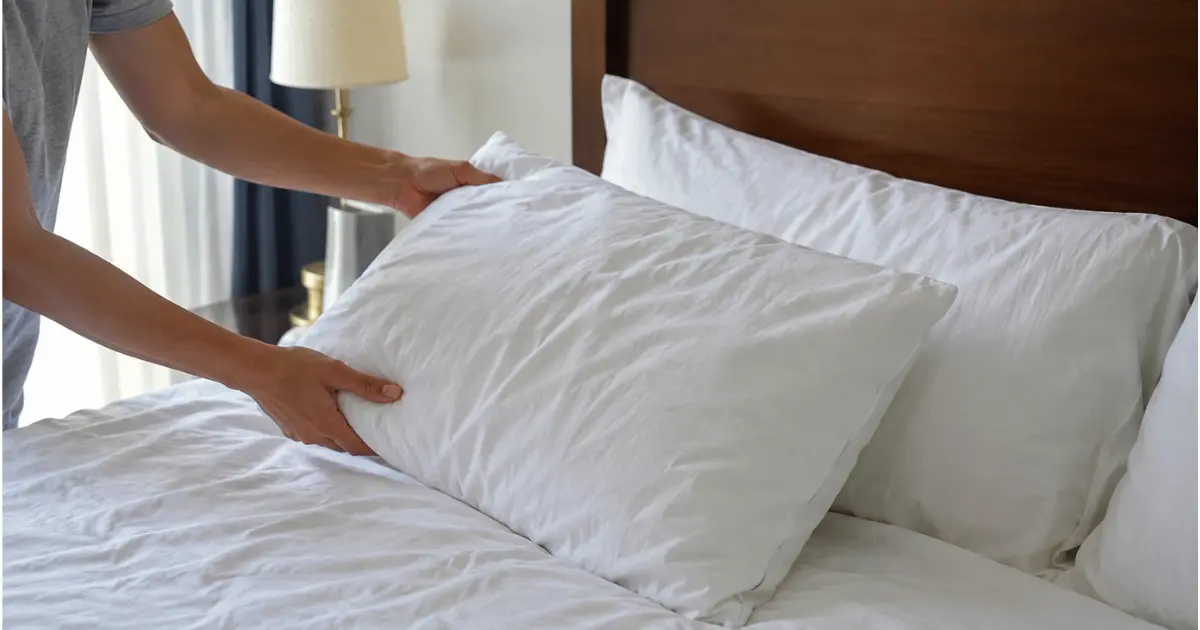
- Fluff every morning. Knead for 10 seconds to re-inflate pockets of air before compression occurs overnight. We have an article about how to fluff a pillow, which includes the proper technique for each fill, plus the technique for deeper re-lofting with tennis balls or wool dryer balls in the dryer.
- Air it out. Direct sunlight for an hour each month will help remove moisture and kill mites. Avoid memory foam and latex (they break down in the sun); choose a breezy and shaded spot.
- Turn it once a week. Distributing compression throughout the surface helps to prevent fatigue in a specific area, which is why rotating your mattress is a good idea.
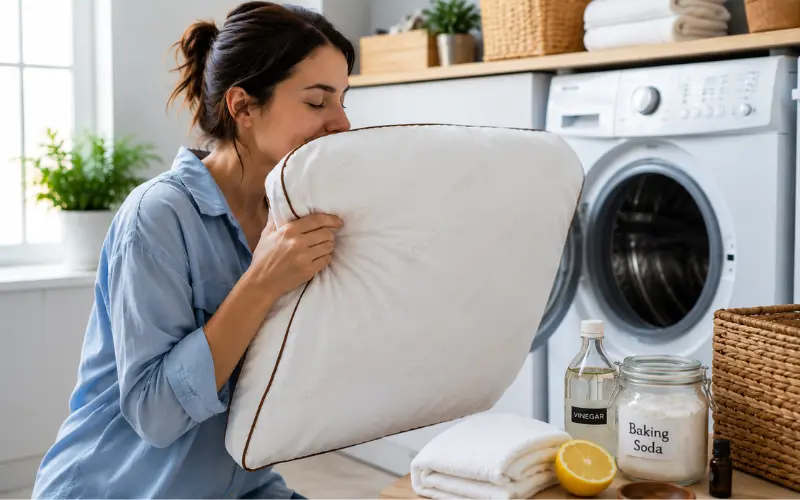
- Wear a protector and wash regularly. Regular washing of the pillows removes the debris weight (provided it is safe to do so according to the care label). Dry thoroughly, as a moist core will flatten and encourage the growth of mildew.
What to look for when buying:
- A baffle-box style for down pillows or a multi-chamber design will prevent the fill from moving to the corners of the pillow.
- Double-stitched or self-piped edges prevent seams from leaking under pressure.
- People don’t realize how important it is to have a breathable shell. Cotton shell releases heat and moisture rather than trapping and holding them (especially cotton sateen shell about 500 thread count). Some pillows come with an antimicrobial shell treatment that helps to reduce the accumulation of debris. Be aware that a thread count of more than ~500 can actually decrease the airflow.
- Adjustable fill designs also feature a zipper, which allows for the addition of fill when the loft decreases, and without requiring a new pillow.
- When it comes to cooling, moisture resistance and airflow are key. A wool pillow also copes with moisture unusually; the wool absorbs the sweat without matting, which is the way that polyester would.
Though nothing changes physics here. Loft stability is not immortality; it is only time!
Key Takeaways
- Every night there are 10+ pounds of head pressure, heat, and sweat that mat the fill, and debris weight from skin, oils, and dust mites that work against pillows to flatten them out.
- There is a trade-off between softness and durability, depending on the fill: polyester dies in 6-18 months, down lasts 2-5 years for good fill power, buckwheat lasts 10 years for loft.
- Air loss happens when it’s flat but fluffable. If it stays flat and doesn’t rise, then you have broken fill. The fold test will indicate which.
- A protector, fluffing daily, airing monthly, and rotation weekly can provide an additional year or more of loft.
- Construction is exceedingly durable: the baffle-box design, double-stitched edges, and breathable cotton shell all delay the flattening process.
Final Verdict
So why does your pillow become flat? Each night, weight, heat, and moisture take their toll on the structure inside it, and no fill will last forever. The key is you get to determine the tempo. Choose a fill that corresponds to your sleeping position and budget, but above all, be sure the fill is dry and free from debris, fluff it every day, and change it as soon as the fold test breaks. Before you can feel it, your neck will.
FAQ
It is normal to lose air overnight, and it is not a sign of damage. You compress air out of the fill for 7-9 hours. If it is full again after a fluff in the morning, the pillow is healthy. If fluffing does not decompress it, then the fill is beginning to fail structurally.
No, quality down will last for a long time longer than a synthetic fill. When choosing polyester fiberfill, 6 to 18 months is the time it takes to fill up mats, and 800 fill power down can maintain loft for five years. The exception is cheap low fill power down, which can clump almost as quickly as polyester.
Yes. A flat pillow causes your head to fall below the neutral spine position, causing the neck muscles to strain for hours. Side sleepers feel it first, as they require the most loft. One of the sure signs that your pillow has lost its support is when you wake up with a stiff neck.
Flatness is not permanent from washing, but from not drying out completely. Can grow mildew, clumps, and mats if damp. A washed pillow always dries completely (it can use dryer balls to break up clumps) and will be back to its normal loft.
Partially. When sunlight exposes matted fibers and clumped-down material, the trapped moisture will evaporate, allowing the pillows to recover some loft after an hour outdoors, particularly if slightly flat. It is not possible to repair bent fibers or collapsed foam cells. Avoid exposing foam and latex to the sun.