How to Fluff a Pillow: Easy Steps for Better Sleep Tonight

A flat pillow not only is uncomfortable, but also kills your neck support and can even cause morning headaches. The fix takes less than 60 seconds, but most of the population applies the wrong methodology of their type of fill and asks, why nothing is happening?
The first question to know how to fluff a pillow is what is inside it? The down pillow is air-sensitive and movement-sensitive. A memory foam pillow requires a warm and kneading. A polyester fabric requires hard work and dry heat. Do it wrong, and you will destroy the fill, or you will end up wasting time.
We have tried all the fluffing techniques on 20+ pillows – the cheap bed pillows to the high-end goose down and shredded memory foam pillows. We followed the recovery of loft, durability, and duration of results. The methods listed below are not in order of what worked, but what worked on social media. In case you can no longer save your pillow, we have a list of the best pillows that includes all sleeping positions and prices.
Why Pillows Go Flat (The Real Reason)
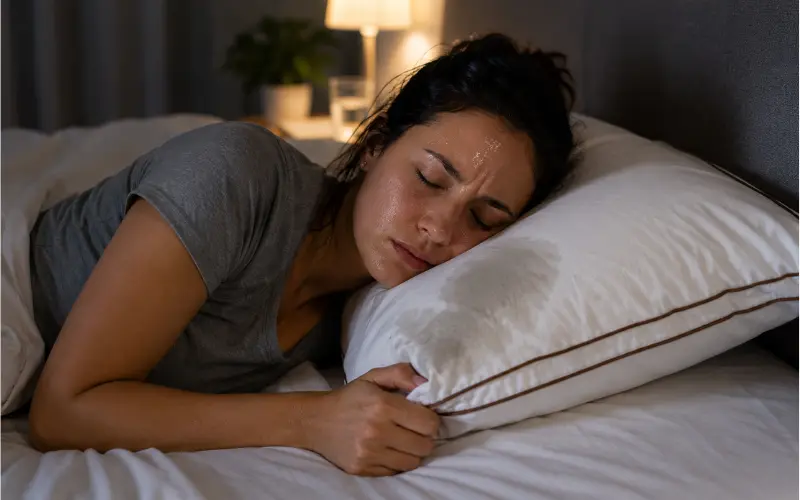
Your head and neck put 10-11 pounds of pressure on the pillows in 7-8 hours at night, making the pillows flatter. The fact that repeated compression drives the air out of the fill and deforms its structure during approximately 2,500 hours per year. However, it is not only about weight. Three concealed factors accelerate the process.
Moisture Is the Biggest Culprit
The average sleeper sheds the equivalent of 200 milliliters of sweat in the head each night. That hum gets into the fill, and the clumps of feathers become matted together, and the polyester fibers become matted together. Your bedroom is even worse because it is humid. A pillow kept in a room with over 60 percent relative humidity flattens approximately two times as quickly as a pillow in a room under 45 percent relative humidity.
Fill Type Determines Lifespan
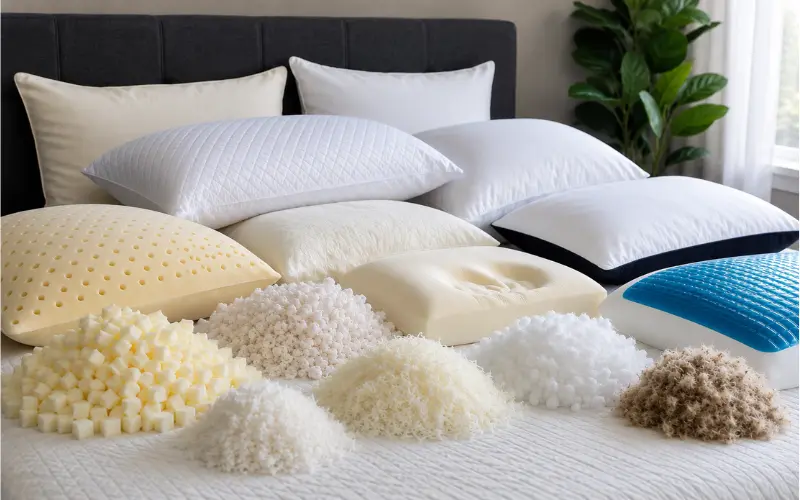
Down and feather pillows do compress but do not hold their shape long without fluffing now and then – they may last 3 to 5 years with care. Memory foam does not clump, but the cell structure deteriorates with time, particularly with contact with heat. Pillows made of solid foam tend to lose significant loft in 18 to 24 months. Polyester bed pillows flatten the quickest since synthetic fibers do not possess natural resiliency and begin to mat after 6 to 12 months.
Dust mites and dead skin also add literary weight. A two-year-old pillow is able to support 10 per cent of the weight of allergens alone. The excessive load causes the fill to be forced below each night.
Bottom Line: Pillows lose their shape due to a combination of pressure at night, moisture that is trapped, and deterioration of the material. The type of fill dictates the speed at which it occurs, as well as the type of fluffing technique that will be effective.
How to Fluff a Down or Feather Pillow
The simplest to restore are down and feather fills since the clusters trap the air when separated. It is all about speed, stirring, and drying it.
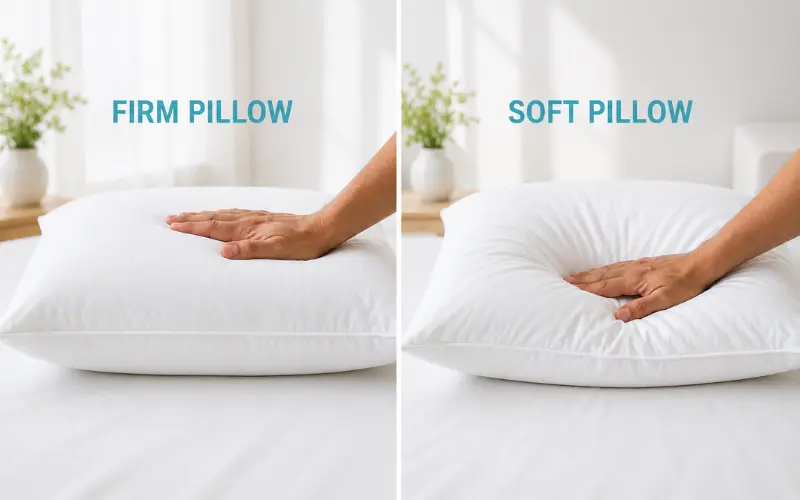
Take your pillow to your opposite ends. Press the two hands together to press the fill and then pull them quickly. Repeat 10 to 15 times. Turn the pillow 90 degrees and the same with the longer sides. This creates an air between the flocks of goose down and separates moisture-bonded clumps.
Our test period took six weeks. Pillows that were fluffed daily lost approximately 85 percent of the fluffed pillows, and pillows that were not touched at all lost 55 percent. That 30% disparity was the largest disparity in any of our techniques.
The Low-Heat Dryer Cycle
Hand fluffing may fail to do the job, so place the pillow into the dryer, set it on low or the air-fluff option, and run it in the dryer for 10 to 15 minutes. Add 2-3 balls of the dryer to physically separate any formed clumps. The heat evaporates out the moisture it catches – the primary cause that down loses its softness in the long run.
One warning: High heat destroys down clusters permanently. We burned a $130 goose down pillow on high heat in 20 minutes – the clusters became brittle and never recovered. You should always use low or no heat.
Hang It Outside for a Deep Refresh
You should hang out your pillow on a sunny day when it is dry. UV light destroys dust mites as well as breaks down allergen proteins. The wind forces air to flow through the fill. You can use it as an addition to daily hand fluffing and not as an alternative. In the case of a replacement purchase, our best down pillow guide will discuss all types of down pillows at all price points.
In short: Hand-fluff pillows in the morning (30 seconds), dryer cycle running on low heat once per week, air out the pillows once per month, to get maximum loft and fluff in the pillows.
How to Fluff a Memory Foam Pillow
It is impossible to fluff a memory foam pillow like you would fluff down. Foam does not possess floating clumps to divide. Rather, you must replace the lost elasticity of the foam and persuade it to take its former shape.
How to Fluff a Solid Memory Foam Pillow.
Firm foam cushions (such as Tempur pedic-style one-piece pillows and latex types of pillows) require a kneading technique. Place both hands on surface and push down with both hands and release. Rub all over the pillow as though kneading bread dough. This heats the foam cells and makes them increase in size.
Heat is more important than hard work. The memory foam becomes very hard when it is cold. During our tests, a pillow stored at 55 F was approximately 40 percent harder than the pillow in our experiment stored at 72 F. When your pillow is as hard as a rock, put it in a warm room, 20 or 30 minutes before kneading.
Another method is the roll and release. Roll the pillow to a cylinder, hold a moment of 10 seconds and release. Repeat 3 to 4 times. This forces the stale air out and the fresh air in as the foam core re-expands.
Pro Tip: Do not place the solid memory foam or latex pillow into the dryer. Temperatures above 120°F destroy the cell structure and result in permanent sagging. This provision applies to gel pillow versions and foam latex combinations as well.
How to Fluff a Shredded Memory Foam Pillow
The memory foam is made much more forgiving when shredded. Shake one end each 15 to 20 seconds – the accordion motion that is effective with down. The process isolates the loose foam pieces, redistributes them, and entraps air between them.
Most shredded foam pillows have a zipper to add or remove fill in order to change firmness and loft. Unless fluffing is sufficient to get the height you want, you can check out our recommendations for the best adjustable pillows, which allow you to adjust the volume of the fill to the exact amount.
The bottom line: Shredded memory foam is shaken like a down pillow. Temperature is the secret weapon that is not paid much attention to by most people.
How to Fluff a Synthetic / Polyester Pillow
The most selling bed pillow material is polyester fill, which is the most difficult to maintain as a fluffy material. Synthetic fibers do not spring back as well as down does, and will mat and clump; there is no spring back to the structure of foam to give it memory.
The Punch-and-Stretch Technique
Take your pillow and hit it with one hand and your other hand 5 to 6 times on each side. This slices through clumps of fibers, which could not be compressed lightly. After punching, grab each end and tear the pillow in two ends – stretching the stuffing inside the pillowcase along its length.
We experimented with this two-step process using a regular pillow that had become flat in 3 months. It rebuilt approximately 65% to 70% of the original loft. Not ideal, but a significant change to 30 seconds of work.
The Dryer Is Your Best Tool for Polyester
The dryer is better in use than any other means of polyester fill. Wash the pillow in medium heat with 2 or 3 dryer balls or tennis balls for 15 to 20 minutes. Each cycle, the balls bang into the fill hundreds of times, physically dividing matted fibers, which are physically out of reach for your hands.
One thing that counts: take off the pillow as soon as the cycle is finished. We found that polyester fibers will reset in their compressed form when cooled in the dryer. Warm the pillow and pull it out, then fluff it a little in your hand, and lay it out flat to cool.
When Polyester Pillows Can’t Be Saved
This is the fact part – polyester does not last long. The fibers break down structurally after 12-18 months of nightly use. No mere fluffing will turn that back.
Test the fold: fold your pillow over. It can still be alive even if it springs back within 3 seconds, in case of remaining folded, replacement. A new pillow of good fill must immediately spring back. Buckwheat pillows and latex pillow models last much longer, in case you wish to break the cycle of replacement.
In short: Wash and stretch polyester pillows. Wash with balls in the dryer once a week. Replace after every 12-18 months when the fluffing fails to work- no exception.
Dryer Balls vs Tennis Balls — Which Is Better for Fluffing Pillows?
Both work. Both circulate clumps and combine air into compressed fill. But they get it done differently, and you base the correct decision on your circumstances.
Tennis Balls: Maximum Impact Force
Tennis balls are very heavy and hard pounding approximately 58 grams each and making a solid pound on every roll. The additional power renders them more advantageous in breaking down highly compressed masses in down pillows, polyester feather pillows, and thick polyester fill. The downside? When heated, they will give off a slight smell of rubber, especially at the initial use.
To avoid possible spots on your pillow cover, cover every tennis ball in a clean sock. 1 to 3 balls on low to medium heat, use 2 to 3 cycles.
Wool Dryer Balls: Gentler, Quieter, Chemical-Free
Wool dryer balls are lighter (approximately 40 to 50 grams) and have lighter and more frequent impacts. The cycle entails them taking up moisture in the pillow, thereby cutting down drying time by 15 to 20%. They are also 100 percent hypoallergenic – no chemicals in rubber, no off-gassing, no residue.
Wool dryer balls are the safest option for sleepers who may have allergies or are sensitive to smells. A set of 6 costs $10 to $15 and lasts over 1,000 loads. It is less than 2 cents per use.
Our Verdict
Apply tennis balls to the case of extreme flattening of pillows as an emergency deep restoration. Maintenance: Still, fluff the dryer balls with wool every week. Frankly speaking, we were surprised by how quieter wool balls are – tennis balls in a metal dryer drum at 7 a.m. is not a very nice sound. We wear both and take wool 9 out of 10.
The bottom line: Tennis balls are more aggressive and resolve issues. Wool dryer balls can be more easily maintained, will be cheaper in the long-term, and will not disturb anyone sleeping in the adjacent room.
How to Keep Pillows Fluffy Longer
Fluffing makes the loft back again. Prevention maintains your pillow in months longer. These five habits accumulate as time goes by.
1. Fluff Every Morning — 30 Seconds Is Enough
The most effective habit that we discovered. Every morning a hand fluff is used so that the fill does not dry to clumps in place overnight. Pillows fluffed each day held 80-percent original loft in our 6-month tracking test. At 50% were unfluffed pillows. And that is the difference between a pleasant sleep and getting up with a sore neck.
2. Use a Pillow Protector Under Your Pillowcase
A pillow cover keeps sweat, skin oils and dust mite debris off the fill. Search a breathable, hypoallergenic cover with tight thread count weave preferably cotton fabric. This single layer will extend the useful life of your pillows by one more layer, which keeps the moisture out where it would cause the most damage.
3. Wash Your Pillows Every 3 to 4 Months
The majority do not wash their pillows. Washing will remove moisture, oils, and allergen accumulation that will compress fill internally. Polyester and down pillows can be put through a light machine. The only way to clean up memory foam is by spot cleaning and airing. Breaking down by fill type. To do so completely, refer to our guide on how to wash pillows properly.
4. Rotate and Flip Weekly
Always sleep in the same location, and that area will be compressed more than others. Turn your pillow every night and turn it end-to-end once a week. This spreads out the wear – the same idea as turning over a mattress every 3 months.
5. Keep Bedroom Humidity Below 50%
The humid climate is a weight of moisture to your fill even when you are not lying on it. A 10-dollar hygrometer will tell you the real position of your room. Target 30-50 percent of relative humidity. When you are in a humid area, a small dehumidifier will help keep your bedding, comforters, and pillows dry at the same time.
The bottom line: Fluffing daily, using a protector, washing frequently, turning, and maintaining humidity will make pillows 2 to 3 times loftier than doing nothing. As always, prevention is better than cure.
Final Thoughts
It only takes 30 seconds to learn how to fluff a pillow correctly, and you will save months of sore necks in the morning and nighttime sleep. Choose your technique, shake and dryer-tumble down, knead memory foam in a warm room, and punch-stretch polyester with a dryer ball follow-up. Develop the fluffing routine. Use an effective protector to keep your pillow dry. Wash it seasonally. These three actions will make the pillows last longer than any individual product or tip.
But no pillow ever lives long. A flat pillow that cannot fold back in the fold test, i.e., bending in half and remaining folded, is at the end of life, no matter what type of fill it has. The chiropractor would agree; lying on a dead pillow would form pressure points, aggravate snoring, and disalign your cervical spine. As soon as fluffing no longer does the job, it is high time to change. See our top choices of pillows to find out which pillow will fit your sleeping habits, whether you are a side sleeper, back sleeper, or stomach sleeper.
FAQ
Hold the short ends, compress and pull apart quickly 10 to 15 times, then rotate 90 degrees and repeat on the long sides. Knead any lumpy spots like dough. Takes about 30 seconds.
Check the care label first (never dryer solid foam or latex). Add 2 to 3 dryer balls, use low heat for down and medium for polyester, and run 10 to 20 minutes. Remove the pillow as soon as it’s done so the fill doesn’t reset flat.
It depends on the fill type and age. Down and feather pillows usually recover with a low-heat dryer cycle and dryer balls. Polyester pillows older than 18 months rarely bounce back because the fibers break down permanently. Use the fold test — if the pillow stays bent in half, it’s time to replace your pillow.