When Can a Toddler Use a Pillow? A Parent’s Safety Guide

Your toddler has been sleeping flat on a simple mattress in his crib since day one, while all of the adults in your house have been sleeping on a pile of pillows. So when will that change? Most sleep doctors for children do agree that a child can have a pillow at 18 to 24 months of age, but not until they are out of the crib. Here’s a guide to the timing, the signs, the safety aspects of toddler pillows, and how to introduce them without disrupting your child’s sleep.
When Can a Toddler Use a Pillow?
You can use a pillow to help your toddler when they move from a crib to a toddler bed, at about 18 to 24 months of age. The American Academy of Pediatrics says the crib should be empty—so a pillow should never go into a child’s sleep area until they are past the crib rail stage of development.
The AAP developed the safe sleep guidelines because soft bedding increases the risk of suffocation in very young children. The main concern of SIDS is during the first year of life; however, pillow and loose blanket suffocation is a concern through toddlerhood. A lot of pediatricians recommend waiting until age two when the child can move in the bed easily while sleeping.
If children appear to be uncomfortable, parents may wonder when they can safely use a toddler pillow. The truth is that readiness isn’t going to depend on your child’s birthday but also where they sleep. The baseline is that they are out of the crib and over 18 months.
Why Pillows Don’t Belong in a Crib
There are two reasons why pillows are not safe in a crib. First, a sleeping toddler may press his face into the soft surface and not breathe well. Second, your child can use a pillow as a step stool to get over the crib rails, and it can pose a serious fall hazard.
The U.S. Consumer Product Safety Commission has reported deaths associated with soft bedding for many years. Federal law now prohibits them, as reflected in the Safe Sleep for Babies Act, which passed in 2022.
People can underestimate the climbing issue. The AAP recommends that caregivers transfer a child to a bed when the child reaches about 35 inches tall or when the rail falls below chest level, at which point the child may be able to climb out of the crib.Throw in a pillow, and that escape occurs sooner, typically head first on the floor.
The following items are appropriate for the sleep environment at each stage:
|
Age |
What’s safe in the sleep space |
|---|---|
|
0-12 months |
Bare crib with a fitted sheet only |
|
12-18 months |
Bare crib; a small lovey only if your pediatrician approves |
|
18-24 months |
Toddler bed transition window; add a pillow after the move |
|
24+ months |
Toddler pillow and a light blanket in a bed |
Signs Your Toddler Is Ready for a Pillow
A toddler is ready for a pillow when they have transitioned to a bed, have good head and neck control, and actively aim for head support. Consider these six indicators in combination, as developmental readiness is different for each child.
- They’ve made the crib-to-bed transition. You must remove the crib as the first and non-negotiable step, whether you convert it to a low bed for a toddler or a twin bed. A typical transition from crib to bed is between 18 months and 3 years old.
- They rest their head on objects. A toddler propped up on stuffed animals or a rolled-up blanket is in need of support. Replace those shoddy pillows with a proper pillow – loveys and stuffies don’t provide support for a head.
- They are able to hold their head and neck up well. Most toddlers can lift and turn their head freely in all positions by 18-24 months. This is how a pillow is safe and not harmful.
- They’ve begun to sleep on their side. When you sleep on your side, there is space between the head and bed. A thin pillow fills the space and maintains neck and spine alignment.
- They appear to be restless or complain about neck pain. An increase in restlessness or any complaints of a stiff neck may indicate discomfort during sleep. There’s one caveat here: the 2-year-old sleep regression causes sleep disruption in the same way, so eliminate that first.
- They ask for one. Toddlers imitate what they see! Your child may be ready if they grab your pillow, or ask for their own, and the other symptoms are present.
Signs Your Toddler Is Not Ready Yet
Wait until your toddler is older than 18 months, out of a crib, or sleeps well without a pillow. There is no early use reward for pillows, and waiting is free.
- They still use a crib for sleeping. No exceptions, even for a 2-year-old.
- They’re under 18 months. They do not need neck support at this stage.
- They lie flat and sleep well. An extra loft does not benefit a comfortable child.
- They don’t get close to the pillow. Toddlers move from place to place at night. If yours rolls over at the bottom of the bed each morning, the pillow is not a necessity; it’s furniture. Try again in a few months.
How to Choose a Safe Toddler Pillow
The best toddler pillow is small, thin, firm, and constructed of non-toxic, hypoallergenic materials with a washable cover. Avoid anything too soft, too large, or too loose. We have a complete guide to the best pillow for kids, which compares specific pillows.
Size and Thickness
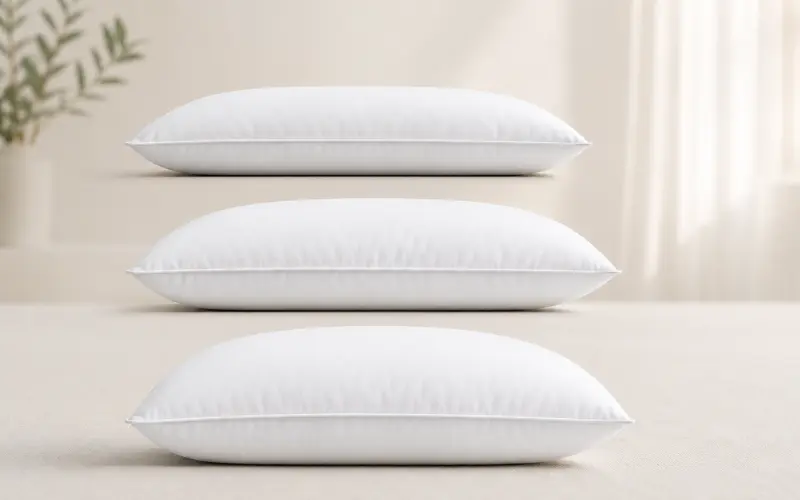
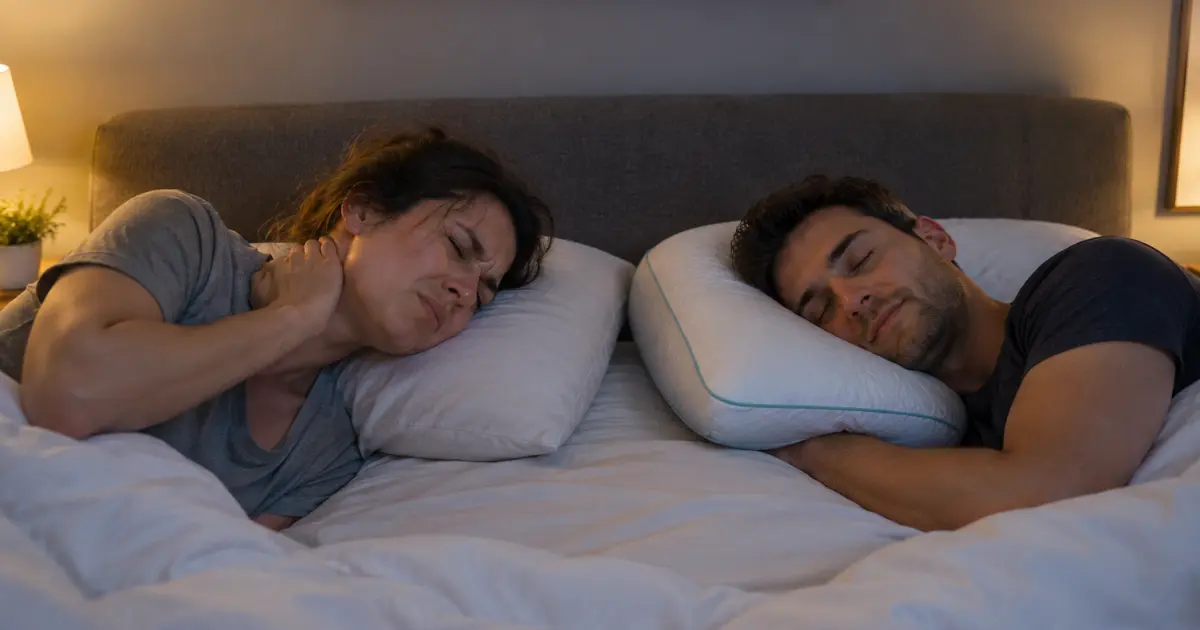
The typical toddler pillow size is 13 x 16 inches; some are 12 x 16 inches, and some are as large as 14 x 20 inches, and they are 2-3 inches thick. That’s in comparison to an adult pillow, which is about 18-20 x 26 inches. An adult pillow raises a little head too high, pulls the chin towards the chest, and stretches the spine out of alignment.
Firmness
Select a firm support rather than a soft pillow. A toddler’s head should not sink into the surface, but should rest on the surface, keeping airways clear and providing even weight distribution with gentle pressure relief. Press the center and see if it bounces back; if it does not bounce back, it is too soft.
Non-Toxic Materials
Look for formaldehyde, phthalates, vinyl (PVC), and chemical flame retardants—manufacturers frequently add all of these to affordable bedding. Researchers have associated some of these endocrine disruptors with hormonal and developmental issues in children. Organic cotton, bamboo, wool, recycled polyester fibers, and plant-based fills such as PLA or Sorona are safer options. A breathable pillow with moisture-wicking material also helps in regulating temperature.
Hypoallergenic Fill
Toddler skin and airways are sensitive to allergens such as dust mites. If there is a history of allergies in your family, or you are not sure if your child is allergic to latex or wool, use certified hypoallergenic fill. We break down the top options in our guide to the best hypoallergenic pillow.
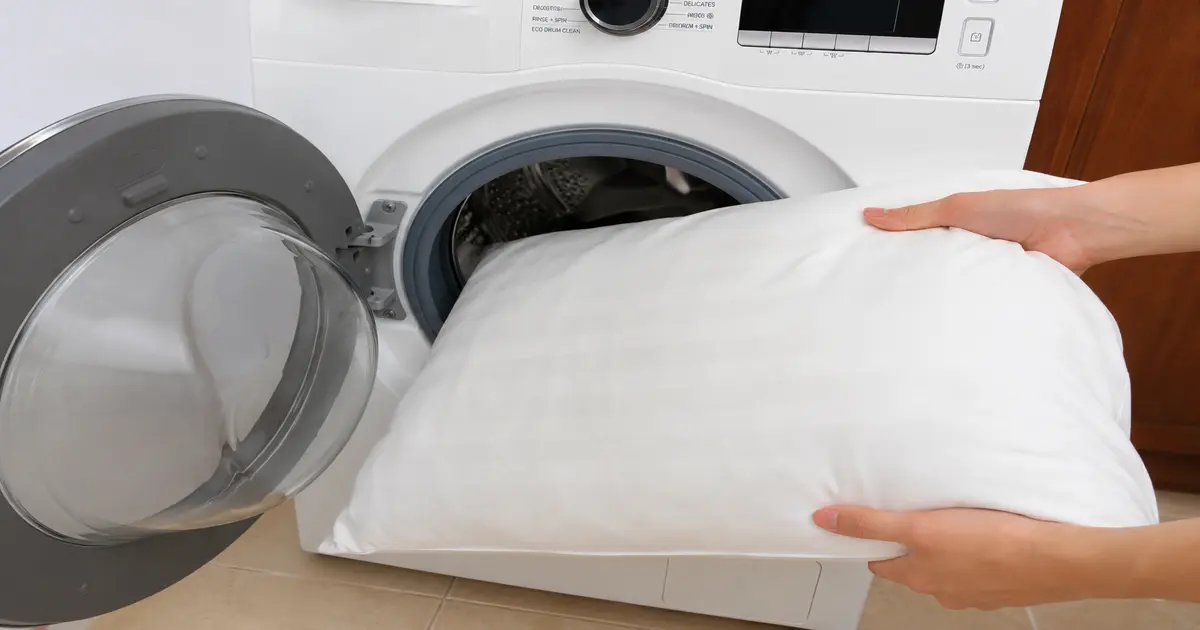
You will experience drool, night sweats, and potty training accidents. A removable cover in machine-washable materials prevents mold, mildew, and bacterial growth, and a waterproof mattress protector saves the mattress. When wash day comes, follow our step-by-step guide on how to wash pillows without ruining them.
How to Introduce a Pillow to Your Toddler
Start with naps and gradually introduce the pillow, allowing your toddler to take the lead. Introducing pillows slowly will not upset existing sleep routines.
- Start at naptime. Nap times serve as a low-stakes trial run because they are shorter and easier to observe during the day.
- Check on them during the night. Place the pillow in overnight sleep, check it in the first week, and adjust it if it is covering their face.
- Don’t force it. Many toddlers don’t use the pillow for weeks. That’s normal; it’s not a failure.
- Stop if there are difficulties. If the pillow causes new night waking, poor sleep quality, or discomfort in the head or neck, delay it for a month or two.
How Long Should a Toddler Pillow Last?
If you wash the toddler pillow regularly, it can last for one to two years. Change it earlier if the fill is flat or lumpy, stains and odors persist after washing, or your child wakes up congested, indicating that allergens have built up in the fill.
Even a good down alternative fill or clump-resistant fill will wear out if used every night. A simple test: press the pillow, and if it doesn’t bounce back, it’s no longer good for sleep posture. Most children grow out of toddler-size pillows when they’re about 4 or 5 years old, and our list of the best pillows for toddlers takes care of that transition.
Key Takeaway
- Wait until 18-24 months and, most importantly, when your toddler is sleeping in a bed and not a crib.
- Pillows in cribs pose suffocation and climbing injury risks, hence the AAP’s recommendation for a bare crib.
- Look for signs of readiness: Bed transition, resting on objects, side sleeping, and good head and neck control.
- Select a firm, thin pillow (about 13 x 16 inches) made from non-toxic, hypoallergenic, washable materials.
Final Thoughts
So, when can a toddler use a pillow? When they are 18-24 months old and sleeping in a bed, not a crib. Then choose a small, firm, non-toxic pillow, introduce it at naptime, and let your child’s comfort level be the guide. The right pillow at the right time and a bare crib today set up years of safe sleep in a healthy sleep environment.
FAQ
No, at 12 months a child is still in a crib, and the AAP advises that there be nothing in the crib other than a fitted sheet. Wait at least another six months until moving to a bed.
No, even in a crib, a pillow is a suffocation risk and a climbing aid at 18 months. Make the bed first and then add the pillow.
Most are 13 x 16 inches and 2 to 3 inches thick, about half the size of an adult pillow and designed for growing necks and small shoulders.
Not safely. The loft of an adult pillow will bend the neck up, leading to cervical pain and poor spine alignment. Children’s biomechanics experts recommend low and firm designs that fit the shoulder width.
If a child already sleeps on a pillow, a slight elevation of the head may help to relieve nasal congestion. Don’t prop up a baby or use a pillow too early to clear a stuffy nose; consult your pediatrician instead.