How to Get Smell Out of Pillows (Every Type, Every Odor)
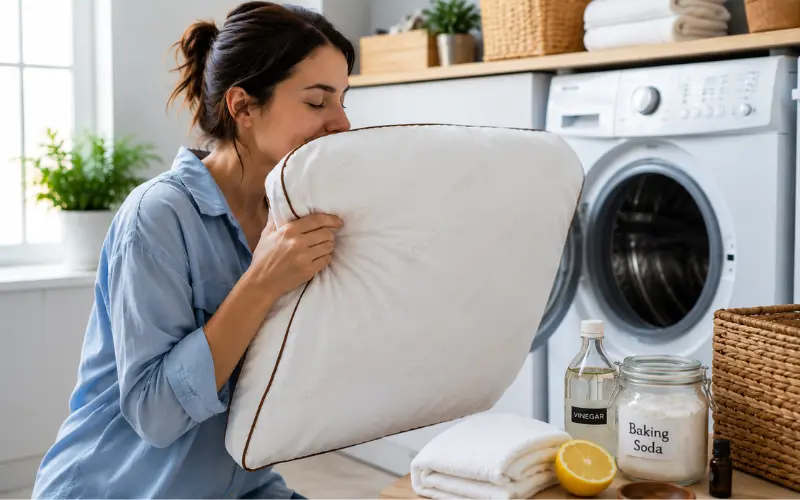
A pillow that smells stale, sour, or musty usually isn’t dirty on the surface. The odor sits deep in the filling, where sweat odor, body oils, and odor-causing bacteria build up over months. The good news: you can fix it at home. Here’s how to get the smell out of pillows the right way, whether you own down-filled pillows, feather-filled pillows, or memory foam.
What Causes Pillows to Smell?
Pillows smell due to the fact that sweat, oil, saliva, and moisture seep through the filling and then feed the bacteria. The more time passes, the more they accumulate, and the smell stays contained within the pillowcase.
Most common are night sweats and body oils. Overnight, your skin produces sebum, which percolates through the sheets to the filling. Throw in some drool and saliva, and there you have the ‘sour smell on one side of the pillow’ many people report.
A musty smell indicates that there is an issue of trapped moisture that eventually leads to mold or mildew. It occurs when hot sleepers, poorly dried pillows, or wet rooms cause it.
Other causes include dust mites, dead skin cells, and pet dander, which all provide food to the bacteria. Diet is a factor as well. Certain medications, alcohol, and spicy food alter the intensity of nighttime sweat, leading to body odor on the bedding.
New pillows can smell as well. This pungent chemical scent or rubber scent is a result of the porous pillow structure of memory foam and latex, which dissipates with air.
How to Get Smell Out of Pillows (Step by Step)
Smell out pillows with baking soda, wash with soap if safe, then dry pillows completely on low heat or in direct sunlight. The leading cause of odors returning is incomplete drying.
Use baking soda, which is a natural odor absorber. Cover the entire pillow with a light, even layer and allow it to sit for at least an hour or overnight for tough odors. Afterwards, vacuum it up with an upholstery attachment.
When the smell persists, it’s time for washing. Please read the manufacturer’s care instructions first, as the washing machine setting varies depending on the fill type. Use a mild detergent or scent-free detergent, warm water, and a gentle cycle, followed by an additional rinse cycle to remove any detergent residue. See our guide to wash pillows without damaging them for an in-depth walk-through on materials.
Drying matters most. A pillow that feels dry on the outside can feel damp in the center, and the dampness will lead to a new and sour smell in days. Dry on low heat with dryer balls or clean tennis balls (to dry evenly) or under the sun in a well-ventilated area.
How to Get Musty Smell Out of Pillows
A musty odor indicates trapped moisture and mold/mildew. Use distilled white vinegar to kill the odor-causing bacteria, and then use UV light to dry the pillow thoroughly to prevent the mildew from coming back.
Use half a cup of white vinegar in the rinse water when washing. Acetic acid will neutralize odors, leaving no vinegar smell after drying. To spot clean, combine equal parts vinegar and water in a spray bottle, spray the affected area, and blot dry with a microfiber cloth.
Here, the best help is direct sunlight. The sun helpfully cleanses and dries out mildew and rejuvenates fabric. Place the pillow out for 3 to 4 hours, turning it over after half the time. If the mustiness persists after cleaning and drying, the mold must have penetrated the core, and it’s time to replace the pillow.
How to Get Smell Out of Down Pillows
You can remove smells from down pillows by washing them on a gentle cycle using warm water and a small amount of mild detergent, followed by a rinse with white vinegar and a low-temperature dryer setting with dryer balls until they are fluffy again.
Down-filled pillows retain odor since the soft down bunches contain body oils and moisture. Use minimal detergent, as suds are difficult to remove from down and can cause an unpleasant odor of their own. Always rinse an additional time.
The drying is the critical stage. Down mats and clumps when wet, so use a low heat setting and add dryer balls to ensure even drying. Allow 2-3 complete cycles. The pillow is ready when there is no cold damp area in the middle of the pillow.
How to Get Smell Out of Feather Pillows
You can wash feather pillows like down, but the quills retain moisture longer and require careful washing; low-heat drying will ensure the pillows do not develop a musty odor. Wash two at a time to balance the washing machine drum.
Sweat odor and oils intensify the natural fragrance that feather-filled pillows develop. Use a fragrance-free wash on a delicate cycle, and do not wash with hot water, as this can harm the quills. Distilled white vinegar added to rinse eliminates residual odors.
Feathers take a while to dry, so use dryer balls and check on them frequently. Put a few through the cloth before you’re finished. Mildew is welcome in any dampness. Spend an hour in fresh air and sunshine to seal in a fresh fragrance.
No-Wash Ways to Deodorize a Pillow
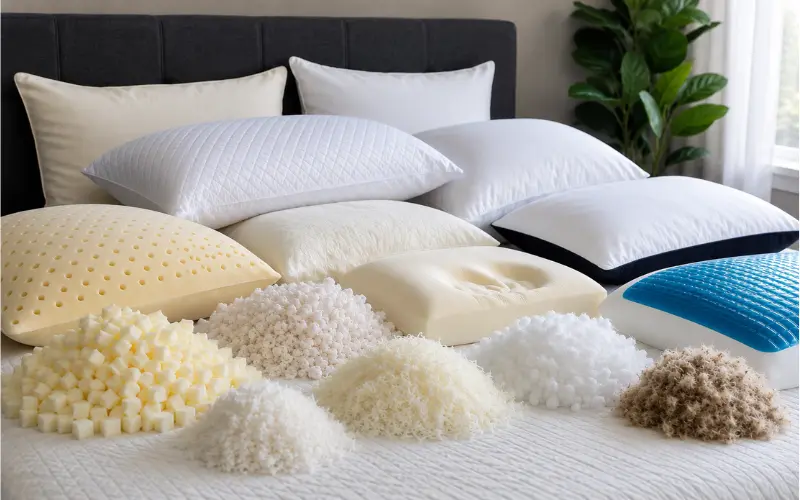
Some pillows can’t go in water. If you do not have to wash it, baking soda, sunlight, freezing, or a mist of light essential oils will lift the smell from the surface and the pores of memory foam, shredded memory foam, or latex.
- Baking soda: Sprinkle the pillow, let it sit for a few hours, and vacuum using the upholstery attachment. Do once a week for hot sleepers.
- Sunlight and ventilation: Exposure to a few hours of sunlight and fresh air naturally eliminates bacteria and ventilates the porous pillow structure.
- Freezing: Place pillow in a plastic bag and freeze overnight. The cold makes the smell-causing bacteria slow.
- Linen spray: Mist linen in a spray bottle with some lavender oil, eucalyptus oil, or tea tree oil. Let it air dry.
These methods also work for cotton pillows, wool pillows, and bamboo pillows between deep cleanses.
How to Remove Chemical or Factory Smell From New Pillows
A new pillow’s chemical smell or rubber smell is harmless off-gassing. You should air out the pillow in a well-ventilated area for 24 to 72 hours, and the factory odor will dissipate naturally. It will be faster with baking soda.
This occurs most often with memory foam, cooling gel memory foam, and latex, which have a compact structure that gives off manufacturing gases. Remove the pillow wrap and spread it out in a fresh air area, out of the bedroom. An open window is a good place.
Sprinkle baking soda on top, leave it on overnight, and vacuum it up. Don’t wash a brand new foam pillow to get rid of the odor – water can damage the foam before it has had a chance to air out.
How to Stop Pillows From Smelling
Prevention is better than deep cleaning! Place a pillow protector under your pillowcase, wash bedding once a week, and have dry hair & clean skin while sleeping. This prevents sweat or body oils from soiling the filling in the first place.
A waterproof breathable cover or a moisture-wicking pillowcase will prevent sebum and drool from escaping the pillow. Consider fabrics such as cotton, bamboo, and linen for breathability.
These simple sleep hygiene tips help as well. Cleanse the face and take off makeup before you sleep to minimize oil that can cause acne on the bed sheets, and allow hair to completely dry. Rotate two pillows weekly, and air the pillow out. When it comes to low odor, a breathable bamboo pillow will not retain moisture or heat as much as most pillows.
When a Smell Means It’s Time to Replace
If there is a residual odor after a thorough wash and dry, something has deeply embedded the odor and it will not go away. If the pillow turns a deeper yellow, the stain does not go away, or lumps form in the pillow or an odor returns in days, you have finished with the pillow.
Cleaning wastes effort at that time. If a pillow can hold odors this deep, it can also contain dust mites and bacteria, making it an important consideration for anyone suffering from allergies, asthma, or sensitive skin. Check out our guide on when to replace pillows and headboards to see our recommendations for choosing the best pillows when it’s time for a change.
Key Takeaways
- Baking soda absorbs daily odors, and white vinegar is a killer on mold and musty smells.
- Always dry pillows fully. Residual moisture brings back the primary cause of odors.
- Wash down and feather pillows lightly, using low heat and mild detergent.
- Use baking soda, sun, or freezing to deodorize memory foam and latex without water.
- A fresh pillow smells because it’s off-gassing, and it will go away with fresh air.
- If the smell persists after washing and drying, discard the pillow.
Final Thoughts
Understanding how to remove the smell from pillows is about two practices: eliminate the oil or moisture that sustains the smell and dry the pillow thoroughly. Grab baking soda for daily freshness, white vinegar for a stubborn musty smell, and sunlight for both. Cover your pillow with a cover and use clean bedding, and it will last much longer. If the odor persists, that means it is not safe to use, so change the pillow.
FAQ
The pillow may not have completely dried. The water that becomes trapped in the filling nurtures bacteria and forms a new sour smell in just a few days. Re-dry in the dryer on low heat until bone dry with dryer balls.
Yes. Baking soda, which is a natural odor absorber, will neutralize the acids caused by body oils and perspiration. Set it for a couple of hours or overnight and vacuum it off. It works on almost all fills, including foam, which you cannot wash.
Vacuum after sprinkling with baking soda. Next, place the pillow outside in the sun for a few hours. The two-in-one eliminates odors of perspiration from clothes while refreshing the garment without the need for water.
Don’t use straight vinegar; use a diluted mix. Use a spray bottle to mix an equal amount of distilled white vinegar and water, spray lightly, and blot dry. As it dries off, the odor gets rid of the musty odor.
No. This is off-gassing, which is the natural off-gassing of manufacturing gases from memory foam and latex. Just put the pillow in a well-ventilated space for 1-3 days; the factory smell will self-clean.