Why Do I Sweat on My Pillow at Night?
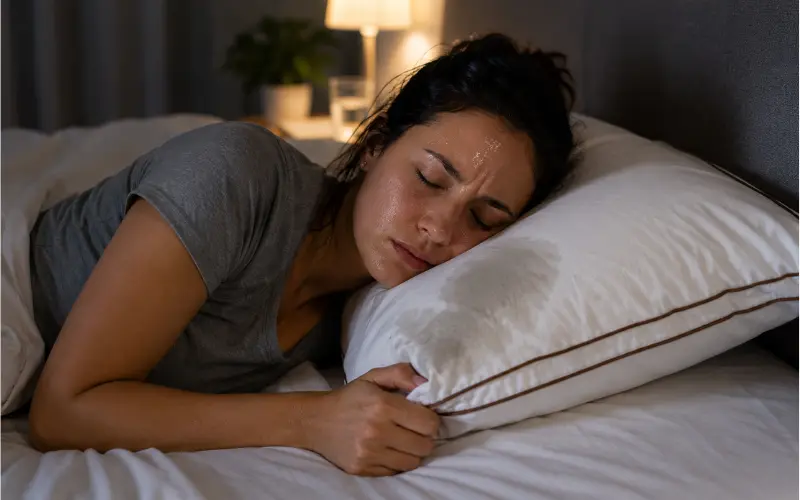
You turn your pillow to the cold side at 3 a.m., and 20 minutes later your sweat wets the cold side. If you’ve heard this before, you’re not alone in having one of the most common sleep complaints. A few correctable factors cause the majority of pillow sweating, and medical issues cause a small percentage. Let’s figure out which one you are experiencing.
Why Do I Sweat on My Pillow at Night?
Your head has one of the highest concentrations of sweat glands on your body, and many pillows retain the heat your head radiates out at night while you sleep. Your face has about 270 sweat glands per square centimeter of skin, whereas the rest of your skin has about 160.
It’s intentional; that’s the density. Your head has a lot of blood flowing through it to keep your brain cool, and if it gets too hot, it responds quickly. These are eccrine glands, the kind that make sweat to cool you off by evaporation.
The problem at night is that evaporation stops working. If a pillow that does not allow heat and moisture to escape forces your head against it, then it traps the sweat. It doesn’t dry; it pools against the fabric. Hair does not help and keeps heat from leaving your body, like the lid of a pot. So, the sweating you see is not necessarily the result of overproduction. It is usually just the normal amount of sweat, but no place to get rid of it.
Is It Your Pillow or Your Body?
If the sweat is only on the head and neck, only on specific pillows and only when you sleep in a cooler place, it is likely your pillow or bedroom. If you are sweating through the sheets or waking up drenched in sweat even in a cool room, it’s more likely your body. This is important before you invest in the wrong repair.
Run this quick check over a week. Ask yourself:
- Location: Just the head, or the whole bed? Head only points to the pillow.
- Consistency: Every night, no matter the season, or worse on hot nights? Weather is related to environment.
- Body Signals: Any fever, weight loss, chills, or daytime sweating? Those indicate a health concern.
- The travel test: Do you stay dry in a hotel or a guest room? If so, it’s your own system.
Most people who sweat on their pillow do not have a medical issue, but rather a material or airflow issue. If your answers are more towards sweating all over the body and other symptoms, then go to the doctor section. If they are hot and made of cloth, read on — the solutions are simple.
What Pillow Materials Make You Sweat More?
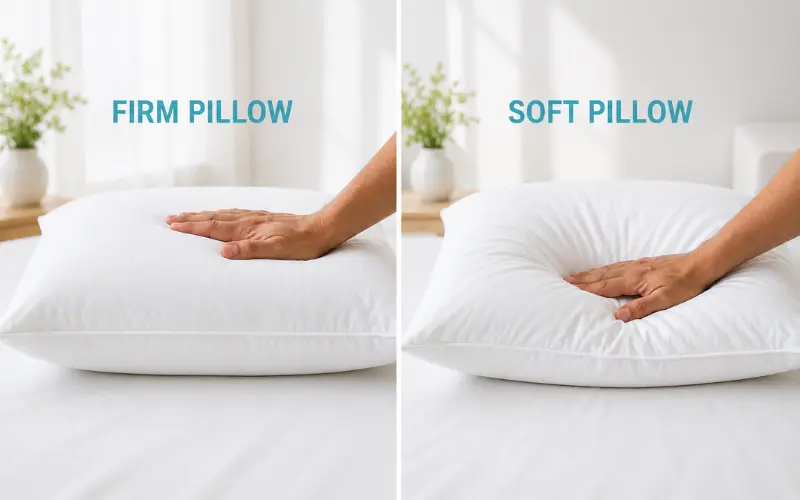
Solid memory foam is the worst for trapping heat, and thus the most likely to cause sweating. The material is dense and has very little ventilation. Your body heat softens and develops your head, blocking ventilation where you need it most. The fabric used on the cover is as important as the fill.
Here’s how common options compare for heat and moisture:
|
Pillow / cover material |
Breathability |
Heat retention |
Notes |
|---|---|---|---|
|
Solid memory foam |
Low |
High |
Molds to your head, blocks airflow |
|
Shredded memory foam |
Medium |
Medium |
Gaps allow some air movement |
|
Down and feather |
Medium-high |
Low-medium |
Soft but can trap humidity over time |
|
Latex |
Medium |
Medium |
Naturally aerated with pinholes |
|
Buckwheat |
High |
Low |
Air flows freely between hulls |
|
Polyester (poly-fill) |
Low-medium |
Medium-high |
Cheap but holds heat and moisture |
The cover fabric is the one that comes in contact with your skin, and it affects the way your sweat reacts. Cotton and bamboo-derived viscose are breathable and moisture-absorbing. Polyester and satin pillow covers and any waterproof pillow protector keep heat inside. Even a breathable pillow can become hot with a vinyl-backed protector.
For those who sleep hot, we’ve compiled our list of the best pillows for hot sleepers to help you determine which ones stay cool all night.
Which Health Conditions Cause Night Sweats?
Several medical conditions can lead to true night sweats, or sweating so much that you wet your bedclothes. The most common is menopause. Hot flashes represent the most common symptom of menopause, with up to 85 percent of women experiencing them, and when they occur at night, women call them night sweats.
Night sweats occur due to a hormonal mechanism. When estrogen levels drop, the brain’s thermoregulatory system gets confused and initiates cooling mechanisms (sweating, vasodilation) when the body is not hot. Other causes include:
- Thyroid issues: Hyperthyroidism (an overactive thyroid) increases metabolism and body heat.
- Hyperhidrosis: In craniofacial hyperhidrosis, the sweat glands on the face and scalp work much harder than they need to, for cooling purposes. This one is aimed at the head.
- Sleep apnea: Interrupted breathing puts stress on the body and can cause sweating.
- Infections and illness: Night sweats are associated with fevers, tuberculosis, and some cancers as a symptom.
- Medications: Sweating is a side effect of some pain relievers, diabetes drugs, and antidepressants.
- Anxiety and stress: The body activates sweat glands, and the face reacts rapidly.
The distinguishing sign is the scale. When health issues cause night sweats, they tend to wet more than a pillow. If your sheets and nightclothes are wet as well, consider it a medical warning to investigate, rather than attributing it to a pillow problem.
Does Your Bedroom Environment Make It Worse?
Yes, your bedroom can make all the difference. The ideal room temperature for sleep is around 65°F (18°C), and temperatures above this will cause your body to go into cooling mode. The humidity exacerbates the situation, as wet air reduces the rate of heat loss from evaporation.
Your bedding is like multiple layers of insulation. A memory-foam mattress reflects heat towards you. Thick flannel sheets and thick down quilt pillows hold it in place. Synthetic mattress covers provide one more airtight layer. These combine to increase the sleeping surface temperature even if the room feels good.
Small changes add up fast. Try these:
- Adjust the thermostat to the mid-60s F before going to sleep.
- Use a fan to circulate air or a dehumidifier in humid climates.
- Use lightweight cotton or linen sheets instead of heavy bed sheets.
- Don’t use a hot tub, eat spicy foods, or drink alcohol or caffeine in the last few hours before bed.
If you can’t stop your room from being hot, the choice of pillow is even more crucial as your final line of defense against the heat.
How Do You Stop Sweating on Your Pillow at Night?
To prevent sweating on your pillow, cool the pillow, increase air circulation, and eliminate heat triggers before bed. First, cool the pillow, as it is the closest to the sweat glands that are doing the work. For those who only sweat on the head, a breathable pillow with a moisture-wicking cover can help.
Switch to a Breathable or Cooling Pillow
Find fills that circulate air, such as shredded foam, latex, or buckwheat, and a cotton or bamboo cover. Some pillows have gel layers or phase-change materials that absorb heat when they come into contact with it. These are designed for the issue you are facing.
The decision on which one to choose depends on your sleeping position and the amount of heat you generate while sleeping. We’ve rounded up the best cooling pillows, including gel, latex, and vented pillows, to find the right fit for your warm sleeping style.
Try Naturally Breathable Fills
Bamboo viscose over shredded foam is a popular choice for a reason: it absorbs moisture and is cool without the need for special technology. If that sounds like you, our list includes the best bamboo pillows that are truly cool and those that aren’t.
Fix Your Sleep Setup and Habits
The pillow is not the only solution to a hot room. Get rid of a heat-trapping waterproof pillow protector. Use a natural pillowcase instead of satin or polyester. Maintain a cool and dark room. When you are replacing your entire sleep surface, it is important to compare the best pillows by type to ensure the support and temperature are a match for your sleep style.
How to Clean a Sweat-Stained Pillow
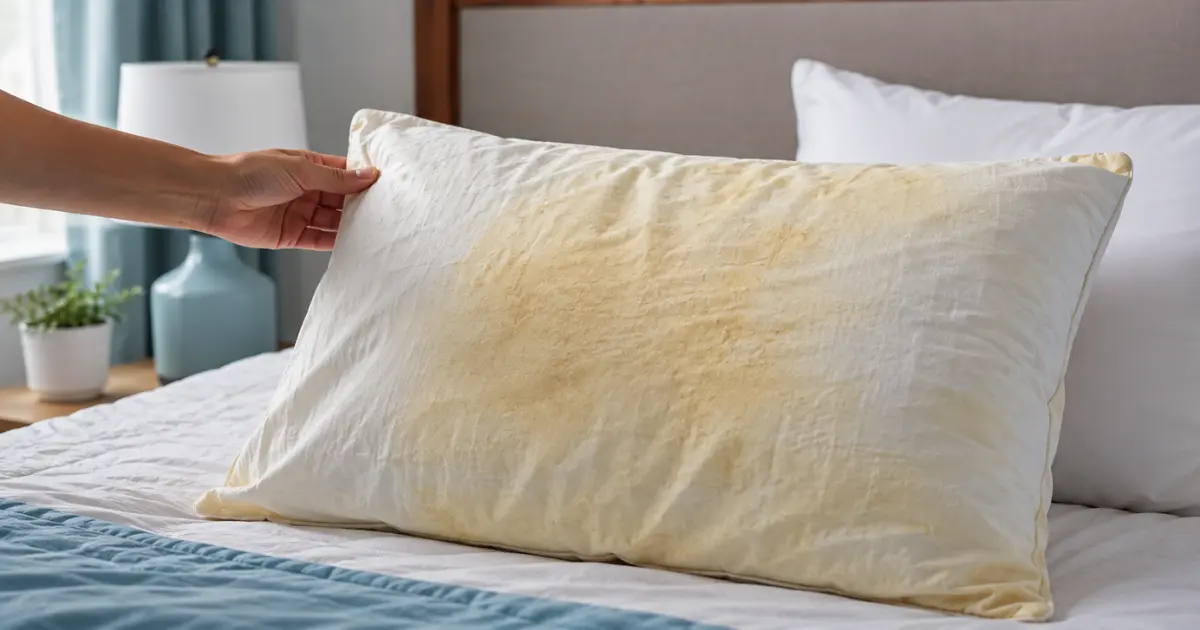
Sweat leaves yellow stains and provides food for dust mites, so a sweaty pillow should be cleaned regularly to maintain its hygiene. Oils and salts in the sweat penetrate the case and enter the fill, where bacteria and mites will grow in the moist, warm environment. The recommendation is for most pillows to be washed every 3-6 months.
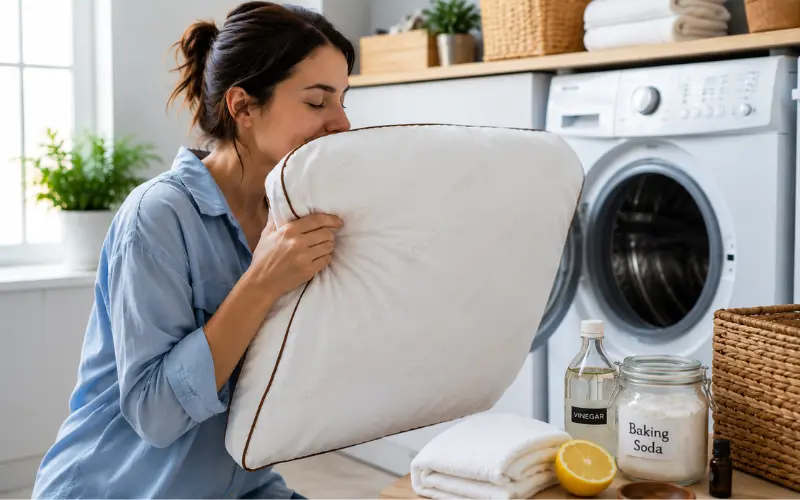
If yellowing, soak in a solution of warm water, white vinegar, and baking soda before washing. Then:
- Foam pillows: Spot clean only. Do not machine wash — this will destroy the foam. Air-dry fully.
- Down and synthetic: Wash warm in a washing machine on a gentle cycle and dry with wool dryer balls to retain the loft.
- Always dry completely. Mold and mildew can quickly develop on a damp pillow.
A washable, breathable pillowcase that is changed twice a week will help the most to keep things fresh between deeper cleanses. When your pillow is yellow and lumpy, it’s probably been degraded by sweat, and it’s time to get a new one.
When Should You See a Doctor?
If night sweats wet your bed sheets, occur frequently and are not caused by heat, or occur with other symptoms, see a doctor. On their own, warm-room pillow sweats aren’t a medical concern. However, excessive sweating without a cause can signal a condition that requires treatment.
Book an appointment if your sweating comes with any of these:
- Fever, colds or a cough that does not go away
- Unexplained weight loss
- Diurnal sweating, not only sweating at night.
- Tiredness, slow heartbeat, or shakiness
- Sweating all over the bed (not just the pillow)
Your doctor can examine your thyroid, review any medications, and rule out infections. If the problem is just on the head and you don’t have other symptoms, be specific and ask about craniofacial hyperhidrosis, which is treatable with prescription wipes and other solutions that a specialist can guide you through.
Key Takeaway
- Your head has approximately 270 sweat glands per square centimeter, which is a lot more than the rest of your body.
- Solid memory foam and non-breathable covers are the major reason for pillow-only sweating.
- If you are sweating on your head, you may be having a pillow or room issue; however, if you are soaking your sheets, then it is likely a health issue.
- Most cases can be solved by a room temperature of about 65F, light bedding and a breathable pillow.
- Seek medical attention if you sweat all the time, sweat when you aren’t hot, or you sweat along with fever, weight loss, or fatigue.
Final Thoughts
Being sweaty on pillows is almost always because of heat buildup and not because of a hidden illness. By nature, your head sweats a lot, and with the wrong pillow or hot room, it has nowhere to go. The first step is to begin with a breathable pillow, a natural pillowcase, and a cooler room. When the sweating persists or is accompanied by other symptoms, that’s a good indication to see a doctor to rule out other conditions.
FAQ
Your head is one of the most densely populated with sweat glands and is one of the most sensitive areas to heat in your body. That heat is trapped in the pillow, and sweat builds up on your head while you remain dry.
They assist in sweltering conditions by circulating air and whisking sweat off your head. They are not going to solve the problem of sweating as a result of a medical problem such as menopause or thyroid problems, as this heat is internal to your body.
It is normal for pillow sweat to occur occasionally, from a warm room. Sweating all the time, even in cooler weather, or soaking through to the bed sheets, is worth investigating – either for a material or health cause.
Yes. Synthetic cases such as satin and polyester prevent moisture from escaping and hold heat. Many times, changing the fabric to cotton or bamboo will already do the trick on sweating.
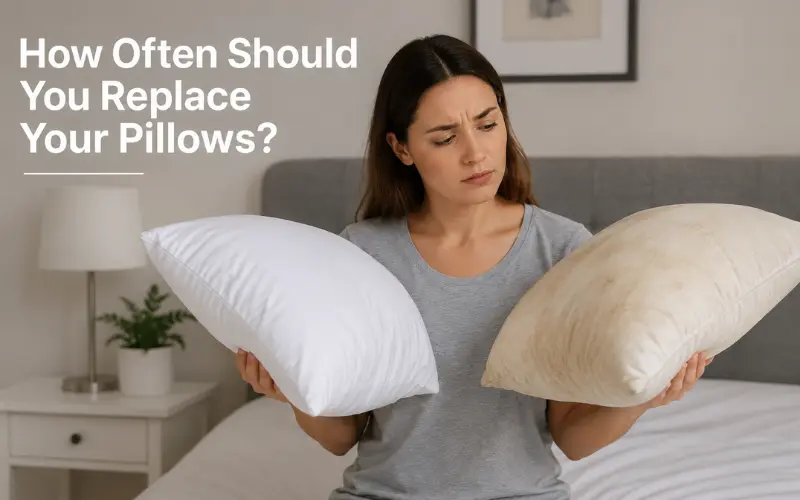
If you are a heavy sweater, change your pillows once every 1-2 years. Sweat oils can, over time, degrade the fill and compress the pillow, and a flattened, yellow pillow has typically lost support and cleanliness.
The cooling pillow can be used in conjunction with a heat-trapping waterproof protector or synthetic case, thus negating their effect. There is a hot bedroom, or an internal cause such as hormones, that can also override any pillow.